New York, NY · Enterprise Salesforce expertise+1 (347) 254 7642
Salesforce for retail in New York City has to keep up with the most demanding shoppers in the country. A customer might browse your site on the subway, try on in your SoHo store at lunch, ask a question by chat that evening, and buy online the next morning. Tourists from around the world walk into Fifth Avenue flagships expecting the same service they get at home. Neighborhood shops in Williamsburg and the Upper West Side compete with marketplaces that deliver in an hour. Zivoke helps retailers across New York City and the metro connect every one of those moments in one customer view.
We work with store teams, ecommerce, marketing, and customer service to design Salesforce around how your shoppers actually behave. Point-of-sale, ecommerce, loyalty, and service data come together, so associates know who is in front of them, marketing knows who to reach, and service knows what happened before the customer called.
Retailers use Salesforce to know their customers and serve them consistently across every channel. A complete design usually covers:
The goal is simple: whichever door a shopper walks through, your team sees the same customer and can serve them well.
We set up Salesforce for retailers in NYC across many formats.
Specialty and fashion retailers with flagship stores, neighborhood locations, and a strong online business.
Luxury and premium retailers where personal relationships with high-value clients drive most of the revenue.
Department and multi-brand stores with many categories, concessions, and loyalty programs.
Neighborhood chains across the boroughs that want to compete on service with national players.
Digital-first retailers opening physical stores or pop-ups in Manhattan and Brooklyn.
Home, beauty, and wellness retailers offering appointments, consultations, and services alongside products.
Signs your retail business needs a better customer system:
Our Salesforce retail CRM in New York City work covers stores, online, service, and data, delivered in phases that respect your trading calendar.
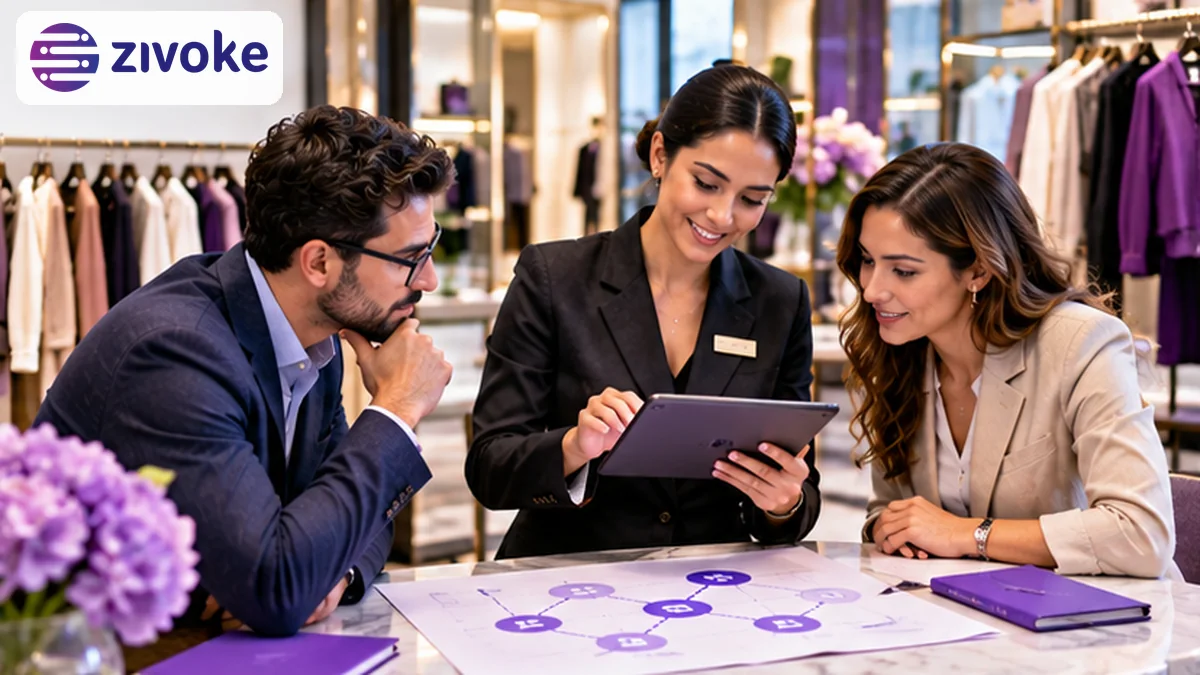
A single customer profile combining POS, ecommerce, loyalty, and service data, with clear rules for matching the same shopper across channels.
Mobile tools for associates to look up customers, see preferences and history, send follow-ups, and book appointments.
Points, tiers, and rewards that customers earn and redeem in store and online, managed in Salesforce or integrated with your loyalty platform.
Connections to your point-of-sale and ecommerce platforms so purchases, returns, and customers flow into Salesforce. See our Salesforce integration services in New York City.
Order questions, returns, exchanges, and product inquiries handled across phone, chat, email, and messaging, with full purchase history on screen.
Unified profiles, segments, and journeys built from real behavior, connected to your email and messaging tools.
Ongoing admin, enhancements, and training. See our Salesforce managed support services in New York City.
In New York, the best retail associates run their own book of clients. Clienteling tools in Salesforce help them do that well and keep the relationship with the business, not just in their phone.
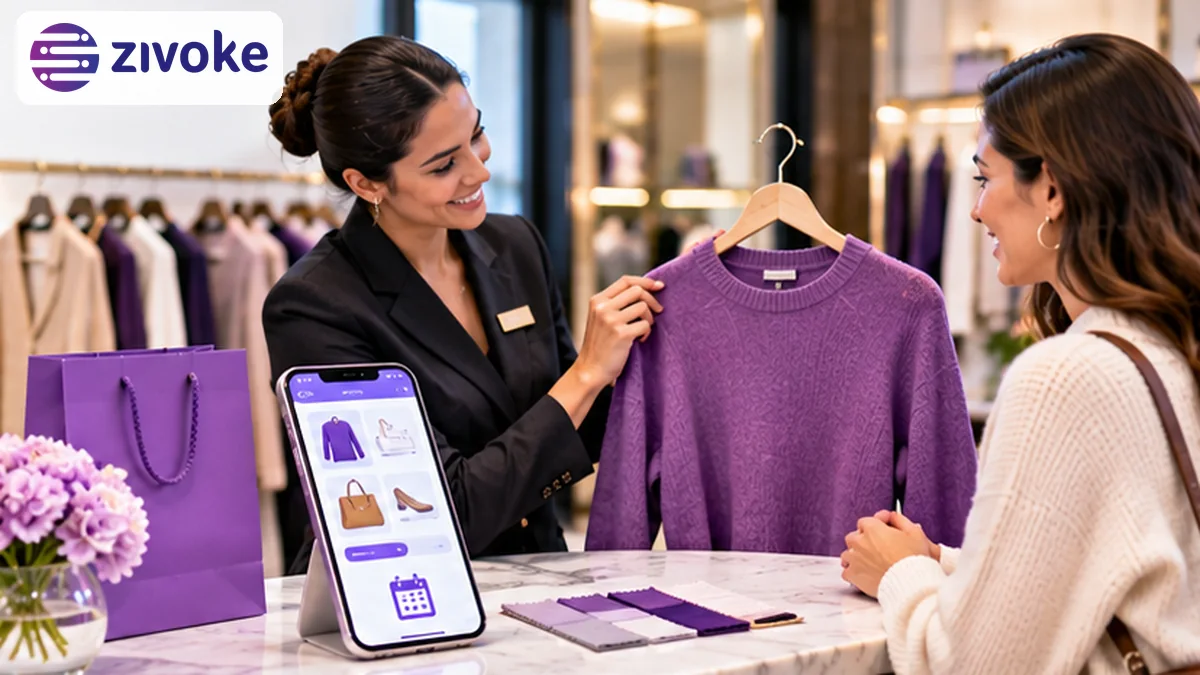
When an associate leaves, the client relationship stays with the store, and the next associate can pick it up with full context.
Loyalty only works if customers see it everywhere. Salesforce can manage:
Whether you run loyalty natively in Salesforce or through a specialist platform, we connect it so associates and service agents see a customer's status instantly.
Salesforce POS integration in New York is the foundation of any store-connected setup. Without it, Salesforce only sees online customers.
We commonly integrate with point-of-sale platforms such as Shopify POS, Lightspeed, Square, NCR, and Oracle Xstore. Typical data flows:
Each integration has a written data contract naming the owner of each field, how often data moves, and what happens on failure. The POS stays the system of record for transactions and payments; Salesforce stores the customer context.
Salesforce Commerce for retail in NYC covers retailers who run their online store on Salesforce and those who use another platform.
We recommend the approach that fits your current platform, team, and budget. Replacing a working storefront is rarely the first step.
New York shoppers expect quick answers on whatever channel they choose. Service Cloud brings those channels together.
Agentforce agents can answer routine questions about order status, store hours, and returns, and hand off to a person for anything else. See our Agentforce implementation partner in New York City.
Retailers hold large amounts of customer data, and shoppers expect it to be handled with care. Businesses holding private information about New York residents fall under the NY SHIELD Act's data security requirements, and card payments are governed by the Payment Card Industry Data Security Standard (PCI DSS).
We are Salesforce specialists, not lawyers, and we do not give legal advice. Your team decides what applies. We build Salesforce to support good practice:
Salesforce for New York retail businesses has to account for how the city shops.
Tourists and international visitors. Flagships on Fifth Avenue, in SoHo, and around Herald Square serve many visitors from abroad. Capturing their details, honoring their preferences, and staying in touch after they fly home is a real growth opportunity.
Dense, competitive neighborhoods. Shoppers can walk to several competitors in minutes. Personal service and remembered preferences are how independent and specialty retailers win.
Small stores, high rents. Space is limited and expensive, so associates must sell efficiently and inventory must be visible across locations and online.
Pop-ups and new formats. Brands open short-term stores in Manhattan and Brooklyn to test the market. Salesforce lets those locations share the same customer view from day one.
Fast fulfillment expectations. New Yorkers expect same-day or next-day delivery and easy returns, which means store and online inventory need to work together.
These examples show the shape of common requests. They are composites, not named client results.
A fashion retailer with three Manhattan stores and a busy online shop keeps store customers in the POS and online customers in its ecommerce platform. Associates cannot see online purchases, and returns cause confusion. Integrating both into Salesforce gives one profile per shopper, and a clienteling app lets associates see full history on the floor.
A Madison Avenue boutique relies on a few senior associates who keep client details in personal notebooks and phones. A clienteling setup in Salesforce records preferences, purchases, and appointments, and approved outreach templates keep communication on brand. When an associate moves on, their clients stay with the store.
A neighborhood retailer with locations across Brooklyn and Queens wants a loyalty program that works at the register and online. Loyalty runs in Salesforce, connected to the POS, with tier-based offers sent through email and SMS.
An online-first retailer opens a three-month pop-up in Williamsburg. Store sales flow into the same customer profiles as online orders, and the team measures how many pop-up visitors become repeat online buyers.
A retail CRM earns its place with numbers. Before go-live we set a baseline from current data, then track a short list of measures that matter to store and ecommerce leaders.
These numbers are reviewed with store and ecommerce leaders every few weeks during the first months. A retail CRM that improves identified transactions alone often pays for the next phase of work, because it makes every later feature, from loyalty to personalization, more effective.
Every retail CRM implementation in NYC we run follows four stages.
interviews with store teams, ecommerce, marketing, service, and IT, plus a review of POS, ecommerce, and loyalty data.
customer data model, matching rules, clienteling, loyalty, service, and integrations agreed with each team.
configuration and integrations in a sandbox, tested with real transactions and scenarios.
associate training in store, a pilot in one or two locations, then a phased rollout.
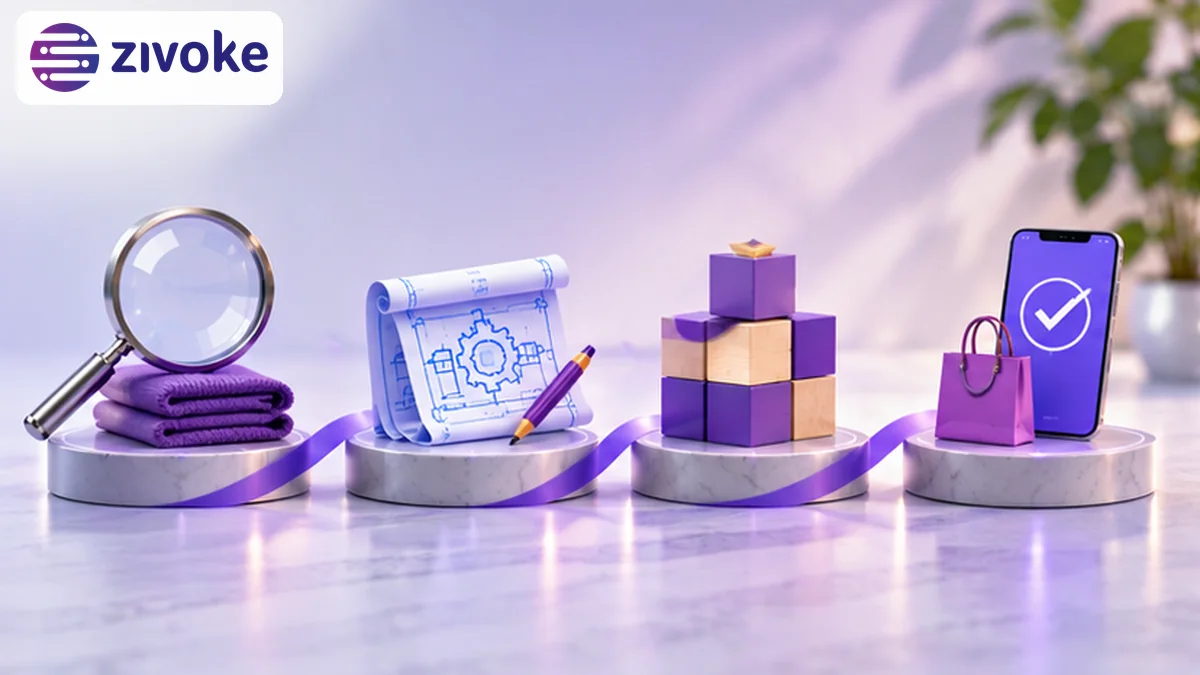
We plan go-lives away from the holiday season, major sales events, and fashion weeks. Many retailers start with customer 360 and POS integration, then add clienteling, loyalty, and service. With access granted and scope agreed, work can start within three days.
A good retail org shows up in customer behavior and associate productivity. More shoppers are identified at the register. Repeat purchase rates rise. Associates follow up with clients instead of waiting for them to return. Service resolves issues without asking customers to repeat themselves. We agree measures at the start, such as identified transaction rate, repeat rate, and clienteling activity, and report against them.
An example of our process-focused Salesforce work is the solution we built for AstroLabs, a Dubai-headquartered firm that helps companies establish themselves in Saudi Arabia. Zivoke built its EnterKSA tracking solution on Sales Cloud and Community Cloud, covering more than thirty steps, with a structured data model, automation, KPI reporting, and a portal outside clients use to follow their progress. It ran from October 2022 to May 2023; the AstroLabs case study has the details. That was not a retail project, but it shows the same discipline we bring to retailers: clean data, reliable automation, and an experience the end customer can see. Client reviews are on our Clutch profile.
Retailers choose a Salesforce partner that understands stores as well as software. Zivoke is a New York-based Salesforce partner, our team holds certifications across Sales Cloud, Service Cloud, Experience Cloud, and development, and our work is reviewed independently on Clutch.
Our certifications include:
What you get:
Different retail formats use Salesforce in different ways.
| Retail type | Typical Salesforce focus |
|---|---|
| Fashion and apparel | Customer 360, clienteling, returns across channels |
| Luxury and jewelry | High-touch clienteling, appointments, private events |
| Department and multi-brand | Loyalty, segmentation, service at scale |
| Beauty and wellness | Appointments, consultations, replenishment reminders |
| Home and furniture | Design consultations, delivery scheduling, trade customers |
| Neighborhood chains | Loyalty, local marketing, store performance |
We work with retailers across Manhattan, Brooklyn, Queens, the Bronx, and Staten Island, and across Westchester, Long Island, the Hudson Valley, and Northern New Jersey. Discovery works best in your stores, so we spend time on the shop floor with associates and managers. Build and testing are mostly remote. We work on Eastern Time and plan every release around your trading calendar.
For brands that also sell wholesale, see our Salesforce partner for consumer goods in New York City.
Tell us how your stores, online team, and service desk work today. We will show you how Salesforce could give them one view of every shopper, on a timeline that respects your trading calendar.
Book a free scoping call