New York, NY · Enterprise Salesforce expertise+1 (347) 254 7642
Salesforce managed support services in New York City are for the long stretch after go-live, which is where most of a CRM's value is won or lost. The launch gets the attention, but the years that follow decide whether Salesforce keeps up with the business. New users arrive every month, a team reorganizes, a regulator asks a new question, Salesforce ships three releases a year, and a report that worked in spring stops making sense by fall. Zivoke keeps Salesforce healthy for companies in Midtown, the Financial District, Hudson Yards, Brooklyn, and across the metro.
You get a certified team that knows your org, answers within agreed service levels, and treats each request as part of a plan rather than a one-off ticket. Engage us on a monthly retainer, on time and material, or as warranty support after a new implementation, whichever fits how your business buys services.
Managed support means a dedicated team takes ongoing responsibility for your Salesforce org: keeping it running, keeping it secure, and keeping it useful as the business changes. It is different from break-fix help, where someone is called only when something fails. Good managed support prevents most failures from happening in the first place.
A complete service covers five kinds of work:
In New York, the mix leans toward protect and change. Teams turn over quickly, which means a steady flow of joiners, movers, and leavers whose access has to be right. Regulated firms need evidence that access is reviewed. And businesses here change fast, so the org has to change with them without breaking what already works.
Companies choose Salesforce managed services in NYC for different reasons, but four situations come up most.
No in-house admin. A growing firm runs Salesforce with a part-time "accidental admin," usually a sales operations lead who has a full-time job already. Requests pile up and nobody owns the platform.
A lean internal team. A larger firm has one or two admins who are stretched across daily requests. They need backup for specialist work, cover for holidays and departures, and help with releases.
After a new implementation. A rollout just went live, and the business wants the builders on hand while users settle in and early fixes land.
After a departure. The admin or consultant who built the org has left, and the knowledge left with them. Someone needs to learn the org, document it, and take over safely.
Signs your org needs managed support:
If your org needs a rebuild before it can be supported, see our Salesforce implementation partner in New York City. If you need contractors embedded in your own team, see Salesforce staff augmentation in New York City.
Our Salesforce support services in New York City cover the full range of run, fix, change, protect, and improve work. One team handles all of it, so context is never lost between a support desk and a project team.

Salesforce administrator support in NYC is the foundation. Our certified admins handle user setup and deactivation, profiles and permission sets, role changes, data imports and cleanups, list views, reports, and dashboards. Every request is logged with who asked, what changed, and when, so you have a record of every change to the org. For firms without an admin, we act as your admin team. For firms with one, we take the overflow and the specialist work.
When something breaks, speed matters, but so does finding the cause. We triage each incident by business impact, restore service first, then fix the root cause so it does not return. Common incidents include failed Flows, integration errors, record-locking problems during large updates, and users locked out before a deadline. Each one ends with a short note explaining what happened and what we changed.
Most valuable support work is small change: a new field, a revised approval, a better page layout, a Flow that removes a manual step. We build each change in a sandbox, test it, document it, and deploy it through a controlled release, never directly in production. Larger requests are scoped separately so they do not crowd out day-to-day support.
Salesforce ships three major releases a year. We review release notes against your org, test the preview in a sandbox, switch on useful new features deliberately, and flag anything that could change how your users work. Release updates that Salesforce enforces on a deadline are tracked so they never surprise you.
Busy New York orgs decay quietly. Duplicates build up, picklist values multiply, unused fields and reports pile up, and storage creeps toward its limit. We run regular housekeeping: deduplication, field and report clean-up, storage reviews, and sandbox refreshes, so the org stays fast and easy to use.
We watch scheduled jobs, Flows, and integrations, and act on errors before users notice. Where integrations were built by others, we document them and add monitoring. For new connections, see our Salesforce integration services in New York City.
Each quarter we review your org with tools such as Salesforce Optimizer and Security Health Check, plus a review of adoption, data quality, and open requests. You get a short report and a ranked backlog of improvements, so support moves the org forward instead of only keeping it alive.
After a new implementation, Salesforce warranty support in New York covers the weeks or months when users find gaps and edge cases. We fix defects in the delivered build, answer how-to questions, and tune automation as real data flows through. Warranty can be followed by a retainer, so the same team carries on without a handover.
Businesses buy support in different ways, so we offer three models. Each uses the same team and the same standards.
| Model | How it works | Best for |
|---|---|---|
| Monthly retainer | A fixed block of hours each month, with agreed service levels and a named team | Steady demand and firms that want predictable cost |
| Time and material | Billed on hours used, with a monthly report of what was done | Variable demand or a backlog to clear |
| Warranty support | A fixed period after go-live covering defects and adjustment | New implementations by Zivoke or another partner |
Time and material Salesforce support in NYC suits firms whose needs rise and fall, such as a university around admissions or a fund around year-end. A retainer suits firms with a steady flow of requests that want a team planning ahead with them. Many clients start on time and material, learn their real volume, and then move to a retainer sized to it. Retainers can be adjusted each quarter, and there is no long lock-in.
A support promise only means something if it is written down. Every managed support agreement sets out priority levels, response targets, and how incidents are escalated.
Response and resolution targets for each level are agreed in your contract, based on your hours of operation and how critical Salesforce is to your business. Firms that need cover outside business hours, such as global teams or operations that run around the clock, can add extended or 24/7 coverage for Priority 1 incidents. Each month you receive a report showing tickets raised, response times against the agreed targets, and work completed, so the service level is measured, not assumed.
Working with a Salesforce managed services partner in NYC should feel like having a capable team down the hall. Ours follows four stages.
we learn your org, document it, review access and integrations, and agree the service levels.
we fix the urgent issues found during onboarding and set up monitoring.
day-to-day requests, incidents, releases, and housekeeping within the agreed service levels.
quarterly health checks and a ranked backlog that turns support into steady progress.
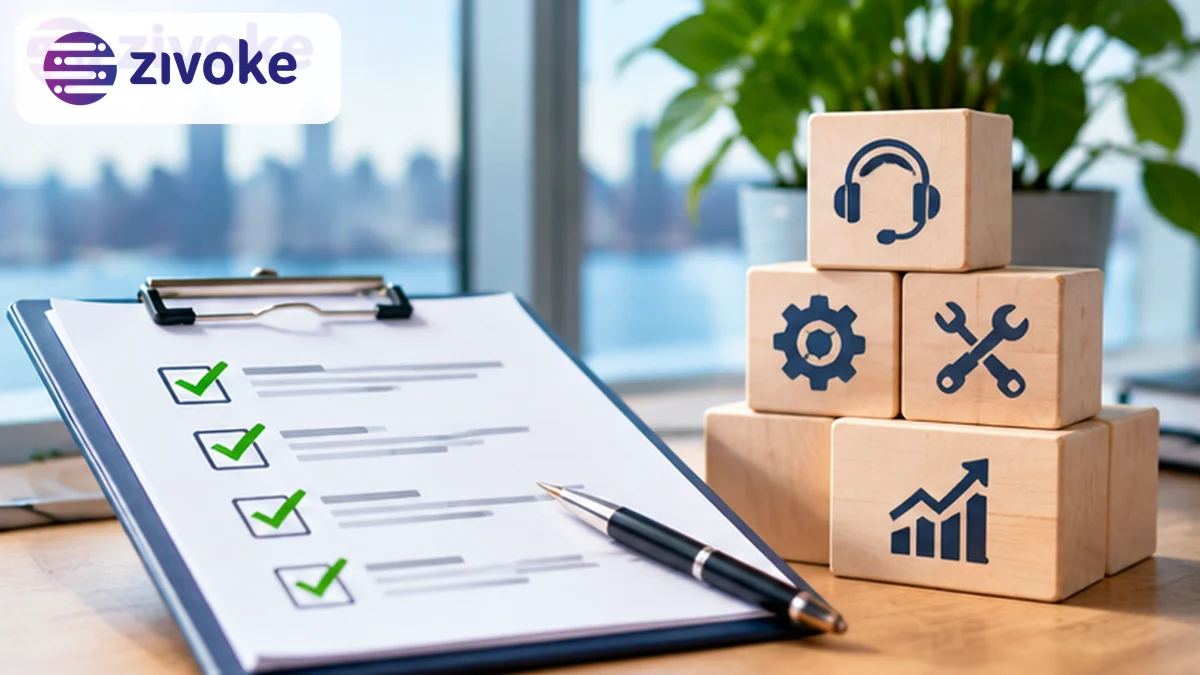
Onboarding usually takes two to four weeks, depending on the size of the org and how much is documented. During that time we build an org guide covering objects, automation, integrations, and key users, which stays with you whether or not you renew. With access granted and the agreement signed, onboarding can start within three days.
The first three months set the tone for the whole relationship, so we plan them in detail.
Days 1 to 30: learn and stabilize. We get access, read the org, and interview your admin, power users, and system owners. We document objects, automation, integrations, and key reports in an org guide. Urgent issues found along the way, such as failing jobs, risky permissions, or broken reports, get fixed first. By the end of the month, the ticket queue is live and your team knows how to raise requests.
Days 31 to 60: settle the rhythm. Day-to-day requests flow through the queue within the agreed service levels. We clear the backlog that built up before we arrived, starting with the requests that block users. Monitoring for scheduled jobs and integrations is in place, and the first access review is complete.
Days 61 to 90: start improving. With the basics under control, we run the first quarterly health check and agree a ranked improvement backlog with your business owners. The first improvements ship, often small changes that remove a manual step a team has complained about for months.
At the 90-day review we look at the numbers together: tickets handled, response times against target, backlog cleared, and what changed for users. If the support model or hours need adjusting, this is when we do it. Most New York clients find their real demand by this point and settle on a retainer that matches it.
Three times a year, Salesforce upgrades every org at once. Most changes are helpful. A few change how screens behave, retire older features, or enforce security updates that can break custom code or integrations. For a New York trading desk, a claims team, or an admissions office, a surprise on a Monday morning is costly.
Our release process for every supported org:
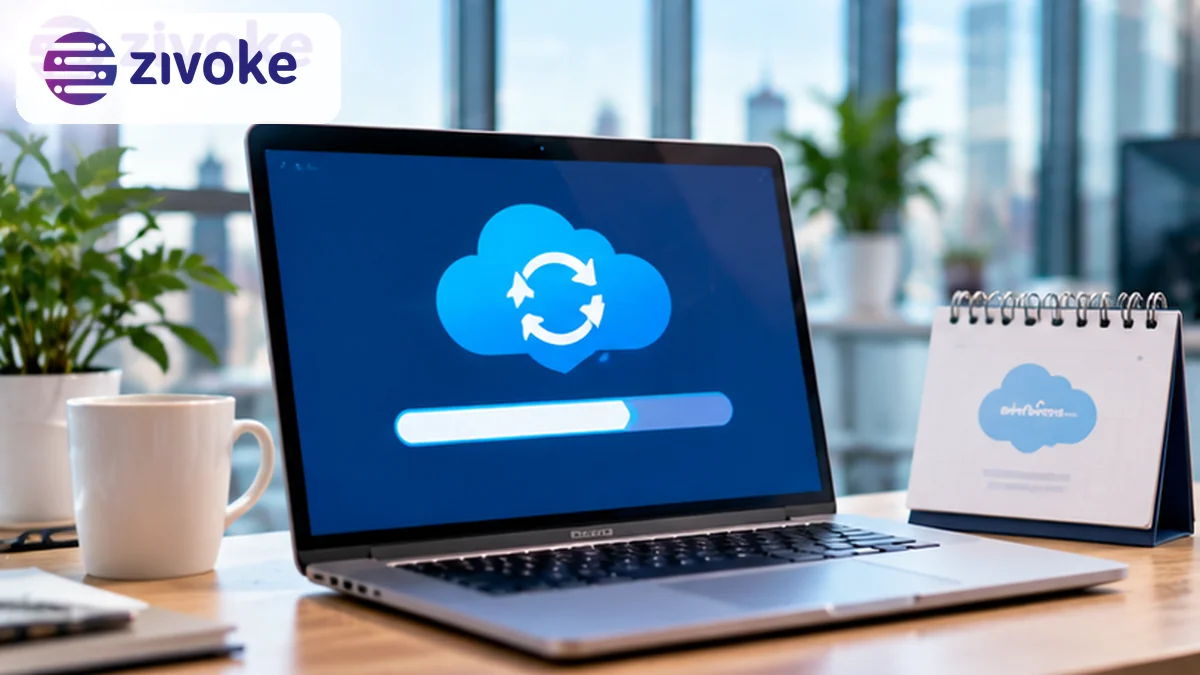
This turns each release from a risk into a chance to use new features, including new Agentforce and automation capabilities that arrive throughout the year.
In New York, a large share of support work is about access. People join, change roles, and leave, and each change has to be reflected in Salesforce quickly and correctly. Firms regulated by the New York State Department of Financial Services work under 23 NYCRR Part 500, which includes requirements on limiting and periodically reviewing user access privileges. Businesses holding private information about New York residents also fall under the NY SHIELD Act's data security requirements.
We are a Salesforce support team, not a law firm, and we do not give legal advice. Your compliance team defines the requirements. We make them easy to meet in Salesforce:
For NYC teams, good support shows up as things that stop happening. Users stop keeping side spreadsheets. Leadership stops hearing that "Salesforce can't do that." Release weekends pass without incident. We agree targets at onboarding, such as request turnaround, incident volume, and adoption, and report on them monthly.
An example of how we build and then sustain a client solution is AstroLabs, a Dubai-headquartered firm that helps companies set up in Saudi Arabia. Zivoke built its EnterKSA tracking solution on Sales Cloud and Community Cloud, covering more than thirty company-formation steps, with automation for dates and reminders, management KPIs, and a client portal for progress and certificates. The project ran from October 2022 to May 2023; the AstroLabs case study has the details.
That project was not in New York, but it reflects what supportable Salesforce looks like: a clear data model, documented automation, and reporting the business trusts. Those are the same qualities we protect in every org we support. For New York clients, our Salesforce managed support services are built to deliver fast, predictable help, an org that improves every quarter, and access you can prove is under control. Client reviews are on our Clutch profile.
New York firms pick a support partner for responsiveness and judgment. They want people who answer quickly, understand the business, and push back when a request would make the org worse. Zivoke is a New York-based Salesforce partner, our team is certified across administration, development, and the main clouds, and our work is reviewed independently on Clutch.
Our certifications include:
What every managed support client gets:
We also say no when we should. If a request would duplicate data, weaken security, or add complexity that does not pay back, we explain why and suggest a better way.
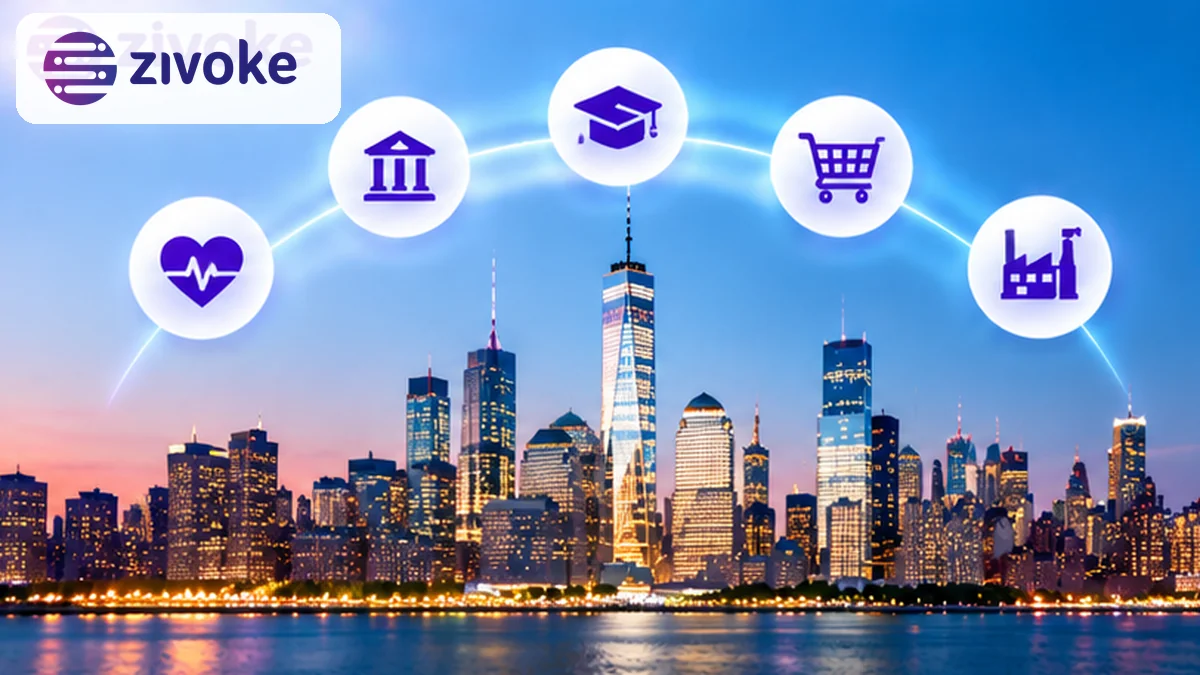
Support priorities change with the industry, so we adapt the service to your sector's calendar and risks.
| Industry | What support focuses on |
|---|---|
| Banking and wealth management | Access reviews, Financial Services Cloud changes, advisor requests, and quarter-end readiness. See Salesforce for financial services. |
| Insurance | Broker and policy data quality, case routing, and claims intake changes |
| Media and advertising | Sales stage changes, rate cards, renewals, and upfront-season support |
| Higher education | Admissions-season cover, Education Cloud changes, and SIS sync monitoring. See Salesforce for higher education. |
| Nonprofits | Donor data quality, year-end giving readiness, and Nonprofit Cloud or NPSP support |
| Healthcare | Access designed around HIPAA requirements and patient-engagement process changes |
We support companies across Manhattan, Brooklyn, Queens, the Bronx, and Staten Island, and across Westchester, Long Island, the Hudson Valley, and Northern New Jersey. Support is delivered remotely, which is how modern Salesforce support works best, with on-site visits for quarterly reviews, training sessions, or major changes when a room helps. We work on Eastern Time, so your requests are handled during your business day.
Requests come in through a shared ticket queue, email, or Slack, whichever your team prefers, and each one is tracked to closure. A named lead runs a short weekly or biweekly check-in, and the monthly report shows exactly where the hours went.
Want to know where your org stands before signing up? Ask for a free org review, or start with our Salesforce consulting services in New York City.
Tell us how your team uses Salesforce and where it falls short. We will review your org, recommend a support model, and show you what the first ninety days would cover.
Book a free scoping call