New York, NY · Enterprise Salesforce expertise+1 (347) 254 7642
Salesforce for SaaS companies in New York City has to keep up with businesses that change their go-to-market every few quarters. A Flatiron startup that sold founder-led last year now has SDRs, account executives, and a customer success team. A Hudson Yards scale-up that started with self-serve sign-ups is adding enterprise sales. A fintech or adtech company in Union Square needs board-ready numbers on net revenue retention by Monday. Zivoke helps SaaS and technology companies across New York City and the metro build a Salesforce org that matches how they actually sell, renew, and grow.
We connect the pieces that usually sit apart: marketing leads, product sign-ups and usage, sales pipeline, billing and subscriptions, and customer success. Revenue leaders get one view from first touch to renewal, and every team works from the same definitions.
A New York SaaS revenue engine has more moving parts than most sales teams. A complete Salesforce design usually covers:
The aim is one place where sales, success, finance, and leadership see the same customer and the same numbers.
We set up Salesforce for SaaS in NYC for technology companies at different stages.
Seed and Series A startups moving from spreadsheets or a lightweight CRM as they hire their first sales team.
Growth-stage companies adding SDRs, customer success, partners, and multiple products, with an org that has not kept up.
Scale-ups preparing for enterprise sales that need territory management, CPQ, approvals, and security reviews.
Product-led companies with self-serve sign-ups that want to spot accounts ready for a sales conversation.
Vertical SaaS and fintech serving regulated industries, where buyers ask hard questions about data and security.
Signs your SaaS company needs a better Salesforce setup:
Our Salesforce CRM for SaaS in NYC work covers the full revenue lifecycle, built in phases that match your growth.

A review of your current org, data, and reporting, with a ranked list of fixes for pipeline hygiene, definitions, and automation.
Lead routing, account matching, opportunity types for new business, expansion, and renewal, and stages with clear exit criteria.
Plans, seats, usage tiers, add-ons, and multi-year deals priced consistently, with approvals for discounts outside policy.
Connections to platforms such as Stripe, Chargebee, or Zuora so contracts, invoices, and payment status appear in Salesforce. See our Salesforce integration services in New York City.
Usage data from your product or warehouse brought into Salesforce or Data Cloud, so sales and success see adoption on every account.
Onboarding plans, health scores, success playbooks, and risk alerts in Service Cloud or a connected success platform.
Ongoing admin, enhancements, and RevOps support. See our Salesforce managed support services in New York City.
A SaaS forecast is only as good as the pipeline behind it. We design pipelines around a few principles.
Separate deal types. New business, expansion, and renewal behave differently, so each gets its own stages and forecast categories.
Stages tied to buyer actions. Each stage marks something the buyer has done, such as a completed demo, a technical evaluation, or a security review, so stages mean the same thing to every rep.
Qualification captured, not guessed. If you use a framework such as MEDDICC, its fields sit on the opportunity and feed forecast reviews.
Clean handoffs. SDR to AE, AE to customer success, and success to renewal are recorded with dates and owners, so nothing falls between teams.
Pipeline coverage visible. Leaders see pipeline against target by segment and quarter, with history to show how it changed.
| Deal type | Typical stages |
|---|---|
| New business | Discovery, Demo, Evaluation, Proposal, Security review, Closed |
| Expansion | Opportunity identified, Business case, Proposal, Closed |
| Renewal | Upcoming, In review, Negotiation, Renewed or churned |
Salesforce for New York SaaS startups often has to handle product-led growth, where users sign up and try the product before anyone in sales talks to them.
Startups do not need everything on day one. We usually start with a clean core, lead routing, pipeline, and basic reporting, and add usage signals and CPQ as the team grows.
Salesforce for subscription businesses in NYC must reflect the fact that revenue is recurring, contracts change mid-term, and customers buy more over time.
Billing usually stays in a dedicated system. Salesforce shows the commercial picture, and the integration keeps both in step.
Renewals are where SaaS companies win or lose net revenue retention. Salesforce renewals management in New York gives teams time to act.
Leadership sees which renewals are at risk, why, and what is being done about it, well before the last month of the contract.
Customer success teams need the same customer view as sales, plus the tools to act on it.
Some SaaS companies run a dedicated success platform. In that case we integrate it so sales and leadership still see health and risk inside Salesforce.
New York SaaS companies report to boards and investors who expect precise, consistent numbers. Salesforce can produce them, if the definitions are agreed first.
We work with your finance lead to agree definitions and reconcile Salesforce numbers with the general ledger, so the board deck and the CRM tell the same story.
SaaS companies hold customer data and are often asked about security by their own buyers. Many pursue SOC 2 reports, and businesses holding private information about New York residents fall under the NY SHIELD Act.
We are Salesforce specialists, not auditors or lawyers, and we do not give legal advice. Your security and compliance leads decide what applies. We build Salesforce to support their work:
These examples show the shape of common requests. They are composites, not named client results.
A Flatiron startup has outgrown its lightweight CRM after hiring its first five reps. Leads are assigned by hand, and nobody trusts the pipeline. A clean Salesforce core with lead routing, three deal types, clear stages, and a simple board dashboard gets the team selling from one system within weeks.
A developer-tools company in SoHo has thousands of free workspaces but no way to see which ones belong to large companies. Usage data from the warehouse flows into Salesforce, workspaces are matched to accounts, and accounts with strong usage are routed to sales. Expansion pipeline grows from accounts that were already using the product.
A Hudson Yards SaaS company finds out about churn at the end of each quarter. Renewal opportunities are now created months ahead, health scores combine usage and support data, and customer success runs playbooks on at-risk accounts. Leadership reviews renewal risk every week instead of once a quarter.
A fintech platform in Union Square is moving upmarket to banks and asset managers. CPQ handles multi-year contracts and approvals, security reviews are tracked as a deal stage, and procurement documents are stored on each opportunity.
Salesforce for SaaS should grow with the company, not ahead of it. New York startups often over-build early, copying the setup of a much larger company, and end up with an org nobody can maintain. We match the setup to your stage.
| Stage | Typical team | What Salesforce for SaaS should cover |
|---|---|---|
| Seed to Series A | Founders, a few reps | Clean accounts and contacts, lead routing, one pipeline, a simple board dashboard |
| Series B | SDRs, AEs, first CSMs | Deal types, handoffs, renewals, billing integration, basic health scores |
| Series C and beyond | Segments, partners, RevOps team | CPQ, territories, usage data, Data Cloud, advanced forecasting |
| Pre-IPO and public | Global teams, audit scrutiny | Strict change control, reconciled revenue metrics, security reviews |
Each stage builds on the last. A clean core at Series A makes the Series B work faster, and agreed metric definitions early on save weeks of reconciliation before a fundraise. For New York SaaS companies raising from demanding investors, that groundwork shows up directly in diligence.
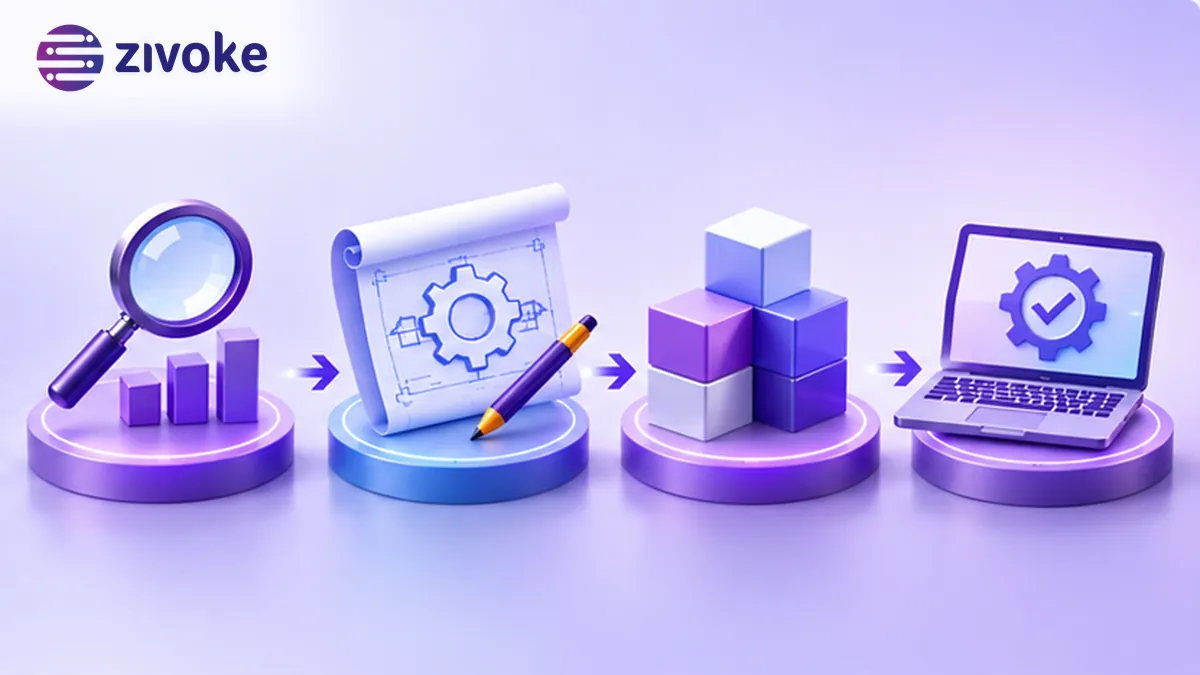
We follow four stages, sized to your company.
review of current org, data, definitions, and reporting with revenue, success, and finance leaders.
deal types, stages, data model, integrations, and metric definitions agreed across teams.
configuration, integrations, and data clean-up in a sandbox, tested with real deals and accounts.
training by role, go-live at the start of a quarter where possible, and ongoing RevOps support.
We avoid go-lives in the last weeks of a quarter, when reps are closing deals. Most SaaS projects start with pipeline and reporting, then add usage data, CPQ, and renewals. With access granted and scope agreed, work can start within three days.
A good SaaS org shows up in trust and speed. Leadership stops arguing about numbers. Renewals are worked months ahead. Reps quote in minutes. Board reports come straight from Salesforce. We agree measures at the start, such as forecast accuracy, renewal visibility, and quote turnaround, and report against them.
An example of our process-focused Salesforce work is the solution we built for AstroLabs, a Dubai-headquartered firm that helps companies establish themselves in Saudi Arabia. Zivoke built its EnterKSA tracking solution on Sales Cloud and Community Cloud, covering more than thirty steps, with a structured data model, automation, KPI reporting, and a client portal. It ran from October 2022 to May 2023; the AstroLabs case study has the details. That was not a SaaS project, but it shows the discipline we bring to revenue processes: clear stages, reliable automation, and reporting leaders trust. Client reviews are on our Clutch profile.

SaaS companies choose a Salesforce partner that understands recurring revenue and moves at startup speed. Zivoke is a New York-based Salesforce partner, our team holds certifications across Sales Cloud, Service Cloud, CPQ, Platform Developer, and Agentforce, and our work is reviewed independently on Clutch.
Our certifications include:
What you get:
Salesforce for technology companies in New York City varies by business model.

| Company type | Typical Salesforce focus |
|---|---|
| B2B SaaS startups | Clean core, lead routing, pipeline, board reporting |
| Product-led growth companies | Sign-ups, usage signals, product-qualified leads |
| Enterprise SaaS | CPQ, approvals, territories, security reviews |
| Fintech and insurtech | Regulated buyers, partner channels, onboarding |
| Adtech and martech | Usage-based pricing, agency relationships, renewals |
| Vertical SaaS | Industry-specific data, implementation tracking, success |
We work with SaaS and technology companies across Manhattan, Brooklyn, Queens, the Bronx, and Staten Island, and across Westchester, Long Island, the Hudson Valley, and Northern New Jersey. Many of our SaaS clients work hybrid, so we meet in person for design workshops and run the build remotely. We work on Eastern Time and fit around your quarter and board calendar.
Tell us how your sales, success, and finance teams track revenue today. We will show you how Salesforce could give them one view from first lead to renewal, with numbers your board can trust.
Book a free scoping call