New York, NY · Enterprise Salesforce expertise+1 (347) 254 7642
Salesforce for manufacturing in New York City serves a sector many people forget the city still has. Manufacturers work out of the Brooklyn Navy Yard, Sunset Park, Long Island City, and the Bronx, making food, furniture, fixtures, apparel, electronics, medical devices, and precision parts. Across the wider metro, Long Island, the Hudson Valley, and Northern New Jersey add aerospace suppliers, industrial equipment makers, and specialty chemical firms. These companies sell to distributors, contractors, retailers, and other manufacturers, and they compete on reliability, lead times, and service. Zivoke helps them run sales, channel partners, and after-sales service in Salesforce, connected to the ERP that runs the shop floor.
We start with the commercial side of the business, where spreadsheets and email usually fill the gaps: quotes, forecasts, dealer relationships, and service requests. Then we connect Salesforce to your ERP so sales and operations work from the same orders, inventory, and customer data.
Manufacturers use Salesforce for the work that happens around production: winning orders, managing customers and partners, planning demand, and supporting products after they ship. A complete design usually covers:
Salesforce does not replace your ERP or manufacturing execution system. Those stay in charge of production, inventory, and finance. Salesforce gives sales, channel, and service teams the customer view they need, using data shared from the ERP.
We set up Salesforce for manufacturers in New York City and across the metro for companies of several kinds.
Small and mid-sized makers in Brooklyn, Queens, and the Bronx moving beyond spreadsheets as customers and orders grow.
Industrial and equipment manufacturers on Long Island and in the Hudson Valley that sell through distributors and support installed equipment.
Building products and fixtures manufacturers that sell to contractors, architects, and developers on project-based orders.
Medical device and life-sciences suppliers that need traceable customer and service records.
Aerospace and defense suppliers with long sales cycles, technical buyers, and strict data-handling rules.
Food and specialty producers that sell to distributors, grocers, and food service.
Signs your company needs a better CRM:
Our Salesforce CRM for manufacturing in NYC work covers sales, channel, and service, scaled to your size and systems.

Accounts, contacts, opportunities, and activity tracking designed around how your sales team actually wins work, whether through repeat orders, projects, or new accounts.
Sales agreements, account-based forecasting, and rebate programs for manufacturers with committed volumes and channel incentives.
Salesforce CPQ or a simpler quoting setup for products with options, price tiers, and discounts, producing accurate quotes that sales and operations both trust.
Experience Cloud portals where channel partners register deals, place orders, check status, download product information, and request support.
Service Cloud for warranty claims and service requests, with Field Service for technicians who visit customer sites.
Connections to your ERP for customers, products, prices, orders, inventory, and invoices. See our Salesforce integration services in New York City.
Ongoing admin, enhancements, and training. See our Salesforce managed support services in New York City.
Salesforce Manufacturing Cloud NYC projects suit manufacturers that sell through agreements and channels rather than one order at a time. Manufacturing Cloud is Salesforce's industry product for manufacturers and adds features standard Sales Cloud does not have.
| Feature | What it does |
|---|---|
| Sales agreements | Records committed volumes and prices with a customer over a period, compared with actual orders |
| Account-based forecasting | Builds forecasts from accounts, agreements, and orders rather than only from opportunities |
| Rebate management | Tracks rebate programs, eligibility, and payouts for channel partners |
| Partner management | Supports dealer and distributor relationships and portals |
| Service for assets | Links customers to the products they own for warranty and service |
Not every manufacturer needs Manufacturing Cloud. A small job shop with project-based work may do well with Sales Cloud and good quoting. A manufacturer with distributor agreements, volume forecasts, and rebates usually benefits from it. We recommend based on how you sell.
Quoting is where many manufacturers lose time and margin. Options, materials, volumes, and customer-specific prices make quotes slow to build and easy to get wrong.
A good quoting setup in Salesforce:
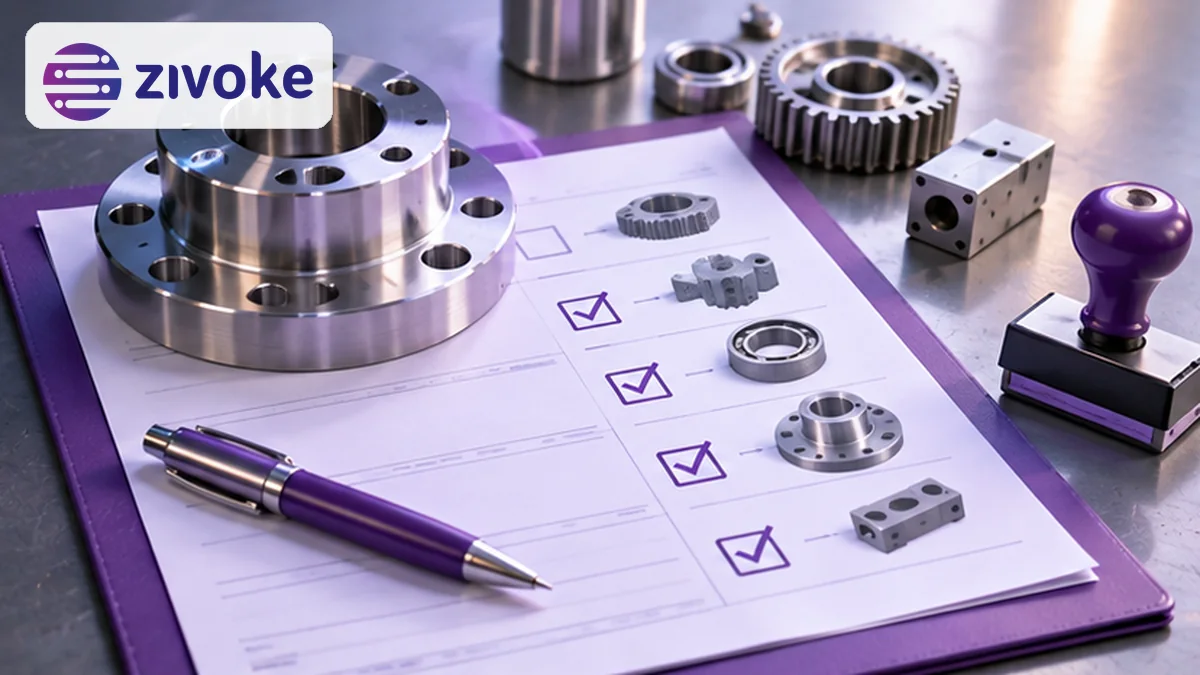
For complex products, Salesforce CPQ handles rules and pricing. For simpler catalogs, standard quotes with price books may be enough. We match the tool to your products, not the other way round.
Many New York manufacturers reach most of their customers through dealers, distributors, and independent reps. Salesforce can bring those partners into one system.
Partners see only their own data. Your channel managers see the whole picture.
Service is a growing share of revenue and reputation for many manufacturers. Customers expect fast responses, technicians who arrive with the right parts, and a record of everything done on their equipment.
Linking service to sales also helps growth. Account managers see open issues before they call, and service history shows which customers are due for an upgrade.
Salesforce ERP integration for manufacturing in New York is central to every project. The ERP owns production, inventory, costing, and finance, and Salesforce needs a reliable view of that data.
We commonly integrate with platforms such as SAP, Oracle, Microsoft Dynamics, Epicor, Infor, and NetSuite, along with manufacturing execution and product data systems. Typical data flows:
Each integration has a written data contract naming the owner of each field, how often data moves, and what happens on failure. Inventory and costs stay owned by the ERP and appear read-only in Salesforce.
Better forecasts help manufacturers plan materials, labor, and capacity. Salesforce can improve the commercial side of forecasting.
Salesforce does not replace your planning system. It gives planners better input from the people closest to customers.
Manufacturers hold valuable data: drawings, specifications, pricing, and customer information. Some also work under specific rules. Defense suppliers may need to meet requirements such as ITAR or the Department of Defense's Cybersecurity Maturity Model Certification (CMMC). Businesses holding private information about New York residents also fall under the NY SHIELD Act.
We are Salesforce specialists, not lawyers, and we do not give legal advice. Your compliance team decides what applies and whether Salesforce, or a specific Salesforce offering, is suitable for regulated data. We build to support those decisions:
These examples show the shape of common requests. They are composites, not named client results.
A lighting and fixtures manufacturer at the Brooklyn Navy Yard builds every quote in a spreadsheet, and lead times stretch while reps wait for engineering to check options. A guided quoting process in Salesforce applies current prices and option rules, routes non-standard requests to engineering, and sends accepted quotes to the ERP as orders.
An industrial equipment company sells through two dozen distributors across the Northeast. Orders and forecasts arrive by email in different formats. A partner portal gives each distributor a standard way to register deals, place orders, and submit forecasts, and channel managers see performance by partner for the first time.
A specialty food producer in Long Island City sells to distributors, grocers, and restaurants. Sales reps track accounts in personal notebooks. Salesforce gives the team shared account records, reorder reminders, and a pipeline for new food-service accounts, with orders and invoices flowing from the ERP.
A medical device supplier handles service requests by phone, with no central record of which devices each hospital owns. An installed-base record, service cases linked to serial numbers, and a scheduled maintenance program give the service team a full history before every call.
Making things in New York City comes with its own pressures, and a CRM should reflect them.
Tight space and short runs. Many New York City makers work in compact facilities in Brooklyn, Queens, and the Bronx, producing smaller batches and more custom orders than large plants elsewhere. That means more quotes, more options, and more need for accurate pricing on every job.
Dense customer base nearby. Contractors, designers, restaurants, hospitals, and retailers are often minutes away. Reps visit in person, customers expect fast answers, and a CRM on mobile matters for teams moving around the city.
High costs, thin margins. Rent, labor, and logistics in New York are expensive. Small errors in quotes or missed reorders hurt more, so consistent pricing and reorder alerts pay for themselves quickly.
Regional supply chains. Many companies source from and ship to Long Island, Northern New Jersey, the Hudson Valley, and upstate New York. Distributor and partner management across that region is often as important as direct sales.
Public and institutional buyers. City agencies, hospitals, universities, and transit authorities are major customers for some New York producers. Their purchasing rules, long approval cycles, and documentation requirements need tracking in the sales process.
We take these realities into account during discovery, so the system fits how your New York team actually wins and serves customers.
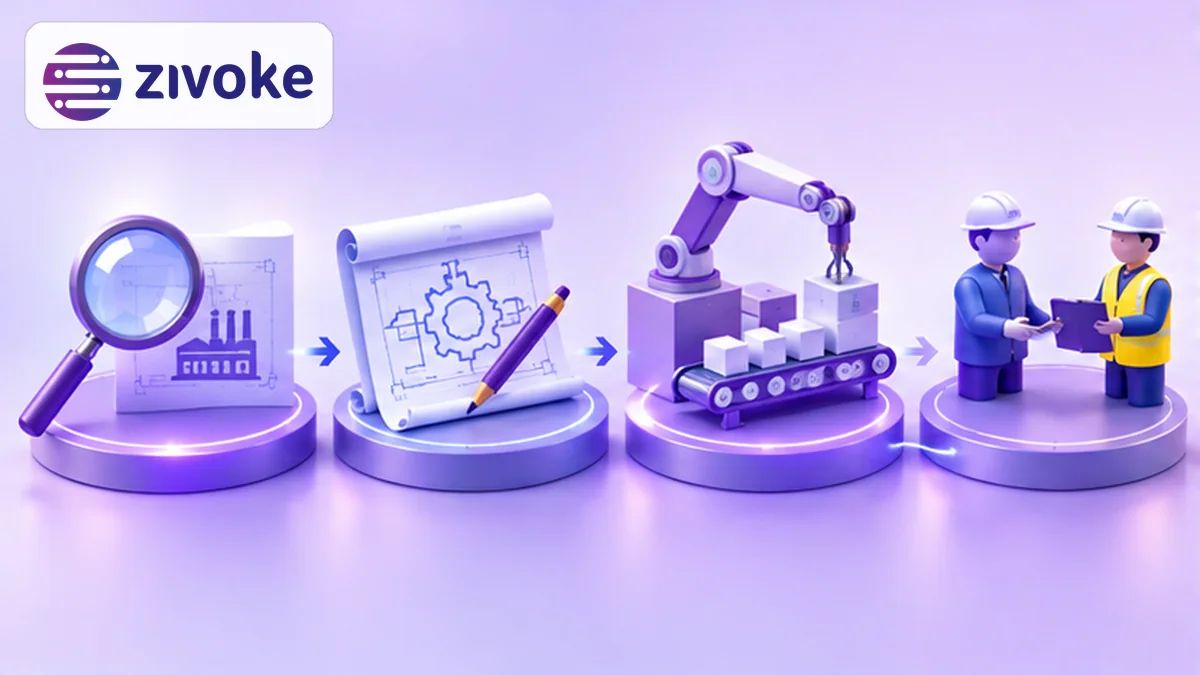
Every Manufacturing Cloud implementation in NYC we run follows four stages.
interviews with sales, channel, service, operations, and IT, plus a review of the ERP and current data.
the data model, quoting rules, partner processes, service flows, and integrations agreed with each team.
configuration, integrations, and migration in a sandbox, tested with real quotes, orders, and service cases.
training by role, a phased go-live, and support afterwards.
Many manufacturers start with sales and quoting, then add channel portals and service in later phases. We plan go-lives around your busiest order periods and year-end. With access granted and scope agreed, work can start within three days.
A good manufacturing org shows up in speed and accuracy. Quotes go out faster and with fewer errors. Sales sees order status without calling operations. Distributors work through one process. Service teams know a customer's equipment before they pick up the phone. We agree measures at the start, such as quote turnaround, forecast accuracy, and service response time, and report against them.
An example of our process-focused Salesforce work is the solution we built for AstroLabs, a Dubai-headquartered firm that helps companies establish themselves in Saudi Arabia. Zivoke built its EnterKSA tracking solution on Sales Cloud and Community Cloud, covering more than thirty steps, with a structured data model, automation for dates and reminders, KPI reporting, and a portal outside clients use to follow their progress. It ran from October 2022 to May 2023; the AstroLabs case study has the details. That was not a manufacturing project, but the same discipline applies to quote-to-order processes and partner portals. Client reviews are on our Clutch profile.
Manufacturers choose a Salesforce partner that respects the ERP, understands channel sales, and keeps the system practical for people on the move. Zivoke is a New York-based Salesforce partner, our team holds certifications including Sales Cloud, Service Cloud, Field Service, Experience Cloud, CPQ, and development, and our work is reviewed independently on Clutch.
Our certifications include:
What you get:
Salesforce for New York manufacturers looks different in each sector.

| Manufacturer type | Typical Salesforce focus |
|---|---|
| Industrial equipment | Distributors, installed base, field service, spare parts |
| Building products and fixtures | Project-based quotes, contractors, architects |
| Food and specialty products | Distributors, grocers, food service, reorders |
| Medical devices | Installed base, service, traceable customer records |
| Aerospace and precision parts | Long sales cycles, technical buyers, controlled data |
| Furniture and home products | Trade accounts, dealers, custom orders |
We work with manufacturers across Brooklyn, Queens, the Bronx, Manhattan, and Staten Island, and across Long Island, Westchester, the Hudson Valley, and Northern New Jersey. Discovery works best on site, so we visit your plant, office, or showroom to see how quotes, orders, and service actually happen. Build and testing are mostly remote. We work on Eastern Time.
Tell us how your sales, channel, and service teams work today. We will show you how Salesforce could give them one view of customers, quotes, and equipment, connected to the ERP that runs your plant.
Book a free scoping call