New York, NY · Enterprise Salesforce expertise+1 (347) 254 7642
Salesforce development services in New York City start where configuration stops. Flow and standard settings cover a lot, but sooner or later a New York business needs something the platform does not do out of the box: a pricing engine for an insurance desk, a portal where advisory clients find their documents, or a sync that moves a million rows from a trading system before the market opens. Zivoke builds that custom layer in Apex, Lightning Web Components, and APIs for companies in Midtown, the Financial District, Brooklyn, and across the metro.
We write code the next developer can read, that passes your security review, and that still performs when your data doubles. Every build goes through version control, peer review, automated tests, and a release pipeline, so custom work makes your org stronger rather than more fragile.
Salesforce development is the part of the work that needs code. It sits on top of configuration and should only be used where configuration cannot do the job well. A good development partner is as willing to tell you that a Flow will do as to write a thousand lines of Apex.
When code is the right answer, the work usually falls into six areas:
In New York, the case for custom development usually comes from scale, regulation, or a process that gives a firm its edge. A trading desk, a reinsurance underwriting team, or a university admissions office often runs on rules that no standard object models well. Our job is to encode those rules cleanly, keep them testable, and leave the rest of the org on standard features.
Four kinds of New York teams bring us development work.
Firms that outgrew configuration. Their Flows have grown into tangled chains that time out or hit limits, and every change breaks something else. Moving the heaviest logic into well-structured Apex usually makes the org faster and easier to change.
Product companies building on Salesforce. Startups in Flatiron, SoHo, and DUMBO that sell to Salesforce customers need a managed package, a listing on AppExchange, and a security review they can pass the first time.
Regulated firms with custom logic. Banks, asset managers, and insurers often need calculations, approvals, and audit trails that go beyond standard features, written in code that compliance and audit can follow.
Teams with inherited code. A contractor wrote most of the org's Apex and moved on. There are no tests worth the name, deployments are manual, and nobody wants to touch the triggers. A Salesforce development company in NYC that starts with an honest code review can usually stabilize this in weeks.
Signs you need development rather than more configuration:
If you need one developer to join your team rather than a scoped project, see hire a Salesforce developer in New York City. For a dedicated team on a time-and-materials basis, see Salesforce staff augmentation in New York City.
Every build is scoped in writing, built in a sandbox or scratch org, reviewed by a second developer, covered by tests, and released through a pipeline. That holds whether the work is a single component or a full custom application. These are the services we deliver most often for custom Salesforce development in NYC.

We write Apex for logic that has to be exact, fast, and testable: pricing and fee calculations, allocation rules, approval routing, and scheduled jobs that run overnight. Triggers follow a one-trigger-per-object pattern with a handler class, so logic is easy to find and order of execution is predictable. Every class is bulkified to handle hundreds of records at once, because data loads and integrations do not arrive one record at a time. Salesforce Apex development in NYC often also means asynchronous work, so we use Queueable, Batch, and scheduled Apex to keep long jobs off the user's screen.
Lightning Web Components are where users feel the quality of a build. We create components that load quickly, show only what each role needs, and work on desktop and mobile. Typical examples include a relationship manager's household summary, a guided intake form for a claims team, and a grid that lets an operations analyst edit many records at once. Lightning web component development in NYC at Zivoke follows accessibility basics too: labeled inputs, keyboard navigation, and sensible focus order.
Some needs are big enough to justify a full application inside Salesforce: custom objects, a data model, automation, components, and reports working together. We design the data model first and review it with your team before writing code, because a model that is wrong early is expensive to fix later. Custom Salesforce app development in NYC projects end with documentation that explains each object, the main classes, and how the pieces fit together.
Where standard connectors fall short, we build custom APIs and callouts. We use Named Credentials so no secret ever sits in code, retry and error handling so a failed call does not lose data, and Platform Events for systems that need to react in near real time. Larger data movement uses the Bulk API. For broader integration programs, including middleware and ERP work, see our Salesforce integration services in New York City.
Clients, brokers, students, and donors increasingly expect a self-service portal. We build Experience Cloud sites with custom components where the standard ones are not enough, and with sharing rules designed so external users see only their own records. For financial firms, that might be a client document vault. For a university, it might be an application status page.
For product companies, we build managed or unlocked packages, set up the packaging org and namespace, and prepare for the AppExchange security review. That review rejects code that skips access checks or stores secrets badly, so we design for it from the first commit rather than fixing findings at the end.
When an org carries years of untested Apex, we start with a code review: static analysis, a test-coverage report, and a look at the riskiest triggers. You get a ranked list of fixes. Then we refactor in small, tested releases, so the org keeps running while it improves.
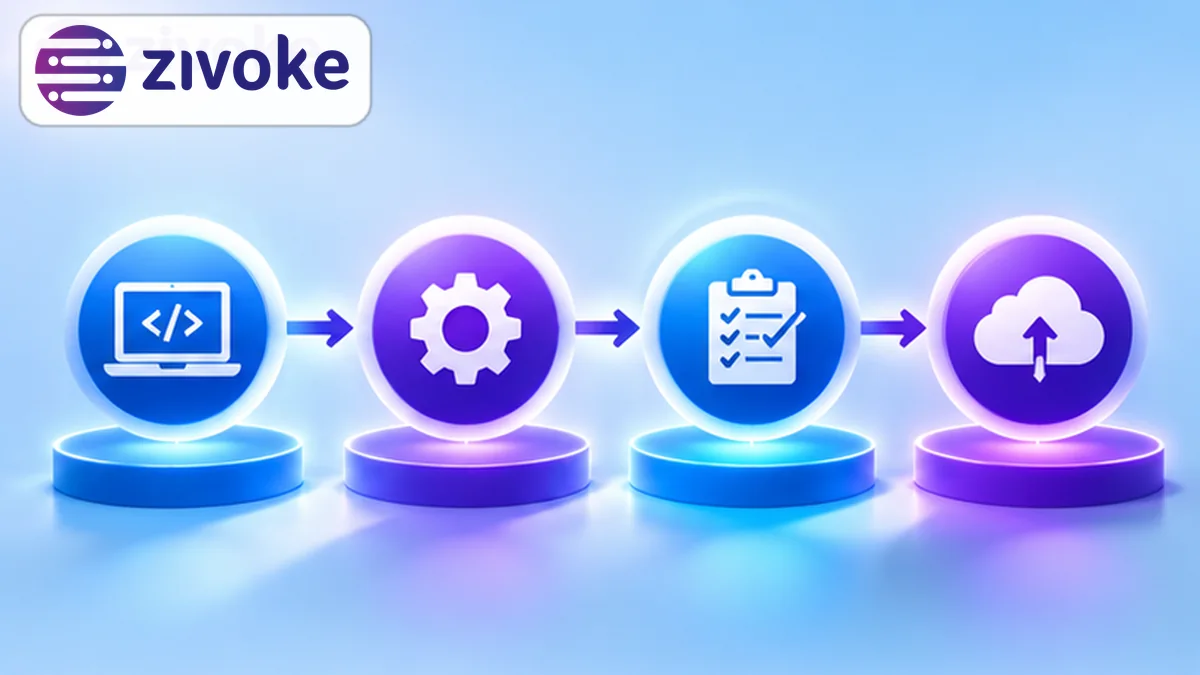
Four stages keep Salesforce development work predictable. Each one ends with something you can see and approve.
requirements, data model, and a short technical design reviewed with your team before coding starts.
development in short sprints, with a working demo at the end of each one.
peer review, automated tests, static analysis, and user acceptance testing in a full sandbox.
deployment through a pipeline, with release notes and a rollback plan.
Our Salesforce developers in New York City work in your repository or ours, and you own the code and its full history either way. Sprints usually run two weeks. A small component can ship in one sprint. A custom application or a managed package typically runs across several, with a release at the end of each meaningful piece rather than one large launch at the end. With access granted and scope signed, work can start within three days.
Custom code is only an asset if someone other than its author can maintain it. These standards apply to every line of code we write:
These habits cost a little more in the first sprint and save a great deal in every sprint after it.
Many New York orgs carry more data than a typical implementation plans for. A wealth manager may hold millions of transactions. An ad-sales team may track every insertion order and impression report. A large university sees a surge of applications in a few weeks each year. Code that works with a thousand records can fail at a million.
We design for that from the start:
Our Salesforce development services in New York City include a review of your largest objects and slowest operations as part of design, so performance problems are found on paper rather than in production.
Custom code can quietly bypass the access rules an admin set up, which is why security reviewers in New York increasingly ask about it. Firms regulated by the New York State Department of Financial Services work under 23 NYCRR Part 500, which includes an application security requirement covering in-house developed applications. Businesses holding private information about New York residents are also subject to the data security requirements of the NY SHIELD Act.
We are developers, not lawyers, and we do not give legal advice. Your compliance team sets the requirements. What we provide is code and documentation that make those requirements easy to demonstrate:
For product companies, the same practices are what get a managed package through the AppExchange security review.
Every line of custom code is something your team has to test, upgrade, and understand for years. So before we write any, we run each requirement through the same short set of questions.
The answer is often a mix: Flow for the routine steps, a small Apex action for the hard calculation, and a component for the one screen users live in. Writing the decision down for each requirement keeps the custom footprint as small as the business allows. It also gives your admins a clear map of what they can change themselves and what needs a developer, which matters when New York teams turn over and knowledge walks out the door.
Good Salesforce development is mostly invisible. Pages load quickly, overnight jobs finish before anyone arrives, and new features ship without breaking old ones. We agree measurable targets during design, such as page load time, job duration, and test coverage, and report against them at each release.
One build that shows our approach is for AstroLabs, a Dubai-headquartered firm that helps companies set up in Saudi Arabia. Their EnterKSA service tracks clients through more than thirty company-formation steps involving several government bodies. Zivoke built the solution on Sales Cloud and Community Cloud around a custom Project object, with each phase and sub-stage modeled as data, automation that sets dates and sends reminders as statuses change, management KPIs, and a client portal that unlocks phases in order and offers certificate downloads. The work ran from October 2022 to May 2023, and the AstroLabs case study has the full detail.
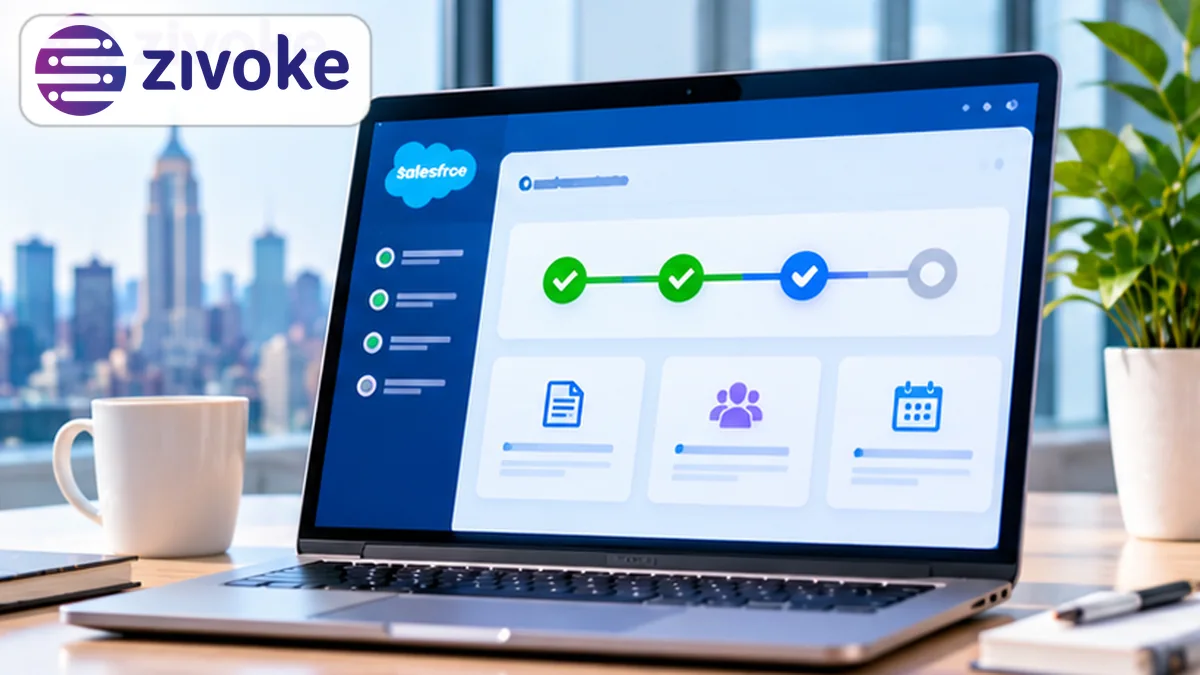
It was not a New York project, but its shape is familiar here: a long process, several internal teams, and external clients who need to see their own status. The same pattern fits a client-onboarding tracker at a Park Avenue wealth manager or an application portal for a Manhattan graduate school. For New York clients, our Salesforce development services are built to deliver code your team can maintain, releases that do not break production, and screens your users prefer to the workaround. Client reviews are on our Clutch profile.
Teams choosing Salesforce developers in New York City usually want three things: people who write clean code, a process that does not depend on heroics, and a partner who will say when code is the wrong answer. Zivoke is a New York-based Salesforce partner, our team holds certifications across development and the main clouds, and our work is reviewed independently on Clutch.
Our certifications include:
What you get on every development project:
We would rather deliver a small, solid release that users adopt than a large one that needs a rescue six months later.
The code changes with the industry, so we start each project by learning how your sector's data and rules work.
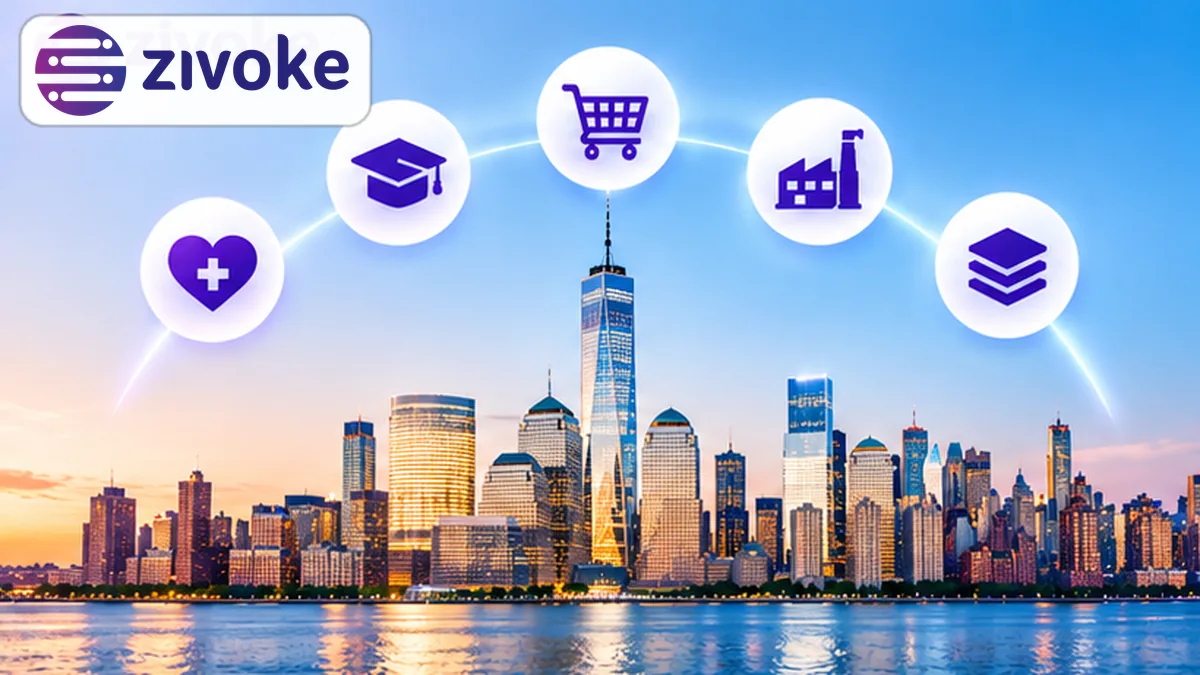
| Industry | What we typically build |
|---|---|
| Banking and wealth management | Financial Services Cloud extensions, household roll-ups, fee and allocation calculations, portfolio-system sync, and client document portals. See Salesforce for financial services. |
| Insurance | Rating and underwriting logic, OmniStudio guided processes for intake, and broker portals. |
| Media and advertising | Insertion-order to invoice flows, inventory and rate-card logic, and campaign performance imports. |
| Higher education | Application portals, review and scoring components, and student information system integrations. |
| SaaS and product companies | Managed packages, usage and billing sync, and AppExchange listings. |
| Healthcare and life sciences | Patient and provider portals with access designed around HIPAA requirements, and referral tracking. |
We work with companies across Manhattan, Brooklyn, Queens, the Bronx, and Staten Island, and across the metro in Westchester, Long Island, the Hudson Valley, and Northern New Jersey. Most development is remote. We meet on-site for design workshops, user testing, and release planning when a room helps. We work on Eastern Time, so your product owner and our developers are online at the same hours.
You see progress through a shared board, a demo every sprint, and pull requests your own developers can review. If you already have an internal team, we follow your branching model, coding standards, and release calendar. When the project ends, you keep the repository, the pipeline, and the documentation. Our managed support team can take over ongoing changes if you prefer.
Not sure whether you need custom code at all? Start with our Salesforce consulting services in New York City, or book a short scoping call and we will tell you honestly.
Tell us what Salesforce cannot do for you today. We will tell you whether it needs code, how we would build it, and what it will take.
Book a free scoping call