New York, NY · Enterprise Salesforce expertise+1 (347) 254 7642
MuleSoft consulting services in New York City help firms stop building the same integration twice. Most large New York organizations have dozens of systems, from core banking and policy platforms to ERP, data warehouses, and Salesforce, and years of point-to-point connections between them. Each new project adds another custom link, another script, another thing that breaks when a vendor upgrades. MuleSoft's Anypoint Platform replaces that tangle with reusable APIs that any team can discover and use. Zivoke designs and builds those APIs for companies in Midtown, the Financial District, Hudson Yards, Brooklyn, and across the metro.
We focus on the parts that decide whether MuleSoft pays off: a clear API-led architecture, APIs designed for reuse, strong security, and operations that keep everything running. You get integration that is faster to change, easier to govern, and simpler to explain to auditors.
MuleSoft is Salesforce's integration platform. Its Anypoint Platform lets teams design, build, secure, deploy, and monitor APIs and integrations in one place. Consulting turns that platform into a working integration program.
A full engagement usually covers:
In New York, MuleSoft projects often involve older core systems, strict security reviews, and several business units that each want their own integrations. Consulting brings those together under one architecture, so the platform becomes shared infrastructure rather than a collection of separate projects.
MuleSoft is a significant investment, so it fits some organizations better than others. These are the New York situations where it usually earns its place.
Many systems, many teams. Banks, insurers, universities, and media groups with dozens of systems and several IT teams building integrations in parallel.
Repeated integration work. The same customer, account, or product data is pulled from the same system by five different projects, each with its own code.
Legacy cores. Core banking, policy administration, or student systems that cannot be replaced soon but need to serve modern apps, portals, and Salesforce.
Existing MuleSoft that is not paying off. The firm bought MuleSoft, but integrations were built point to point inside it, reuse is low, and costs are rising.
Digital channels. Client portals, mobile apps, and partner APIs that need secure, consistent access to back-office data.
Signs MuleSoft consulting would help:
If you only need a few Salesforce connections, MuleSoft may be more than you need. Our Salesforce integration services in New York City cover native APIs and lighter tools, and we will tell you honestly which fits.
Our MuleSoft integration services in New York City cover the full lifecycle, from first assessment to day-to-day operations.

We map your systems, current integrations, data owners, and pain points, then score each integration by business value, risk, and reuse potential. You get a roadmap that shows which APIs to build first and how they will be reused by later projects.
We set up environments, business groups, access control, and the deployment model, whether CloudHub 2.0, Runtime Fabric, or a hybrid arrangement. We also configure CI/CD pipelines so every API is built, tested, and deployed the same way.
We design each API before writing code, using RAML or OpenAPI specifications reviewed with the teams that will consume it. Implementations use DataWeave for transformations and MUnit for automated tests. Every API is published to Anypoint Exchange with documentation, so other teams can find and reuse it.
Salesforce MuleSoft consulting in NYC connects Salesforce to the rest of your landscape through reusable APIs rather than one-off links. Sales Cloud, Service Cloud, Financial Services Cloud, Data Cloud, and Agentforce can all use the same APIs that portals and internal apps use.
We move integrations from older middleware, custom scripts, or point-to-point code into MuleSoft in planned waves, keeping systems running throughout and retiring old connections only after the new ones are proven.
For firms already on MuleSoft, we review architecture, reuse, security, performance, and capacity use, then produce a ranked list of fixes. Common findings include duplicated APIs, missing policies, and capacity that can be consolidated.
MuleSoft API integration in NYC works best with API-led connectivity, which organizes APIs into three layers. Each layer has a clear job.
| Layer | What it does | Example |
|---|---|---|
| System APIs | Unlock data from a core system in a stable, secure way | Customer and account data from core banking |
| Process APIs | Combine data and apply business rules | A single client view across banking, wealth, and CRM |
| Experience APIs | Shape data for a specific channel or user | Data for a client portal, mobile app, or Salesforce |
The value comes from reuse. Once a system API for customer data exists, every new project can use it rather than connecting to the core system again. Changes to the core system are handled in one place. Over time, new integrations become faster because most of the building blocks already exist.
We do not force every integration into three layers. A simple, one-off data feed may need only a single API. The architecture document records where we follow the pattern and where we deliberately simplify, so later teams understand why.
Every MuleSoft implementation in NYC we run follows four stages.
systems, integrations, owners, volumes, and the business case.
API-led architecture, API specifications, security model, and deployment approach.
API implementation, automated tests, CI/CD, and publishing to Exchange.
monitoring, alerting, runbooks, and support, with a governance rhythm for new APIs.
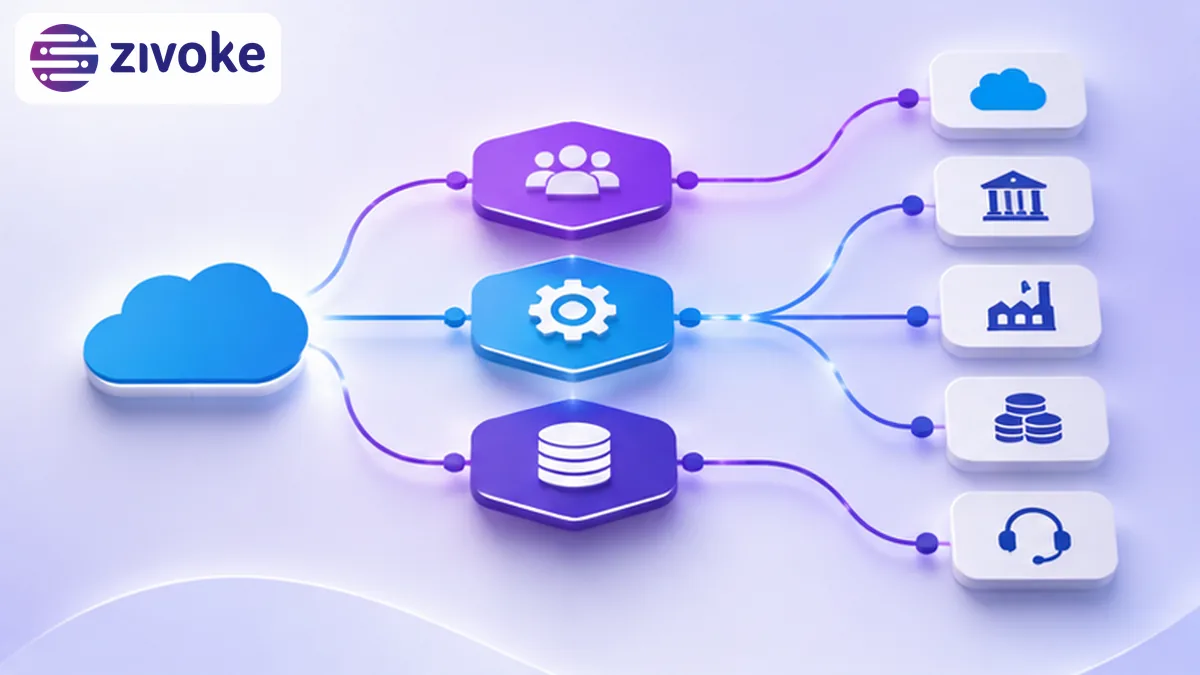
We release APIs in waves tied to real projects, so the platform proves its value early. A first wave usually delivers a few system APIs and one process or experience API that solves a visible business problem. Later waves reuse those APIs and add new ones. With access granted and scope agreed, work can start within three days.
Salesforce and MuleSoft work well together, but only if the boundaries are clear. Salesforce is where people sell, serve, and engage clients. MuleSoft is how Salesforce reaches data and processes that live elsewhere.
Common patterns we build:
Where native Salesforce APIs are enough for a single connection, we may use them directly. MuleSoft adds the most value when several systems or teams need the same data.
These examples show the shape of common New York requests. They are composites, not named client results.
Relationship managers at a Manhattan bank need deposits, loans, cards, and wealth holdings on one screen in Salesforce. Each product lives in a different system, and three previous projects each built their own connection to the core. We replace those with system APIs over each product platform, a process API that assembles the client view and applies entitlement rules, and an experience API shaped for Salesforce and the client portal. The next project, a mobile app feature, reuses the same process API and ships in a fraction of the time.
A New York insurer wants brokers to quote, bind, and check policy status online. Rating, policy administration, and document systems are all on-premises. System APIs unlock each one, a process API runs the quote-to-bind sequence, and an experience API serves the broker portal. API Manager policies limit each broker firm to its own data and throttle traffic during renewal peaks.
A university in the city has admissions in Salesforce, records in its student information system, housing and financial aid in separate tools, and a dozen departments asking for feeds. Instead of a dozen custom exports, system APIs over the student information system and aid platform feed a process API for the student profile. Departments subscribe to the APIs they need through Exchange, and the registrar controls who sees what.
In each case the first project costs about the same as a point-to-point build. The savings arrive on the second and third projects, when most of the APIs already exist.
MuleSoft platforms often start tidy and become messy as more teams build on them. Governance keeps reuse high and costs under control.
We set up a light governance model, sometimes called a Center for Enablement:
Governance should help teams move faster, not slow them down. We keep the process short and give internal teams templates and examples so they can build to the standard on their own.
APIs expose data, so security reviewers in New York examine them closely. Firms regulated by the New York State Department of Financial Services work under 23 NYCRR Part 500, which includes requirements on access privileges, encryption, application security, and third-party service providers. Businesses holding private information about New York residents also fall under the NY SHIELD Act.
We are integration specialists, not lawyers, and we do not give legal advice. Your compliance team defines the requirements. We build MuleSoft APIs that make them easy to meet:
An API that works on launch day still needs care. Certificates expire, back-end systems change, and traffic grows.
Our operating model includes:
If you prefer not to run this yourself, our Salesforce managed support services in New York City can cover MuleSoft operations under an agreed SLA.
Good MuleSoft work shows up as speed. New projects reuse APIs instead of building integrations from scratch. Changes to a core system are absorbed in one place. Security reviews take days instead of weeks because the API inventory is already there. We agree measurable targets at design, such as API reuse, delivery time for new integrations, and error rates, and report against them.
Our Salesforce delivery record includes a solution for AstroLabs, a Dubai-headquartered firm that helps companies establish themselves in Saudi Arabia. Zivoke built its EnterKSA tracking solution on Sales Cloud and Community Cloud, covering more than thirty company-formation steps, with automation, KPI reporting, and a client portal. It ran from October 2022 to May 2023; the AstroLabs case study has the details. That project did not use MuleSoft, but it reflects how we work: start from the real process, design the data model carefully, and give the business reporting it trusts.

For New York clients, our MuleSoft consulting services are built to deliver reusable APIs, integrations that are easier to change, and a security posture your reviewers can verify. Client reviews are on our Clutch profile.
Firms choose a MuleSoft consulting partner in NYC for architecture judgment as much as build skill. They want people who know when to use MuleSoft and when not to, who design for reuse, and who connect it cleanly to Salesforce. Zivoke is a New York-based Salesforce partner, and our work is reviewed independently on Clutch.
Our certifications include:
What you get on every MuleSoft engagement:
MuleSoft Anypoint Platform consulting in NYC looks different in each sector, because each has its own core systems and rules.

| Industry | Typical MuleSoft work |
|---|---|
| Banking and wealth management | System APIs over core banking and portfolio platforms, client 360 process APIs, partner and portal APIs. See Salesforce for financial services. |
| Insurance | Policy, claims, and rating APIs for broker portals and Salesforce |
| Media and advertising | Order, billing, and audience data APIs across ad and finance systems |
| Higher education | Student information system APIs for admissions, advising, and portals. See Salesforce for higher education. |
| Healthcare | Scheduling and referral APIs, with HIPAA-aware data handling |
| Retail and consumer brands | Order, inventory, and loyalty APIs across commerce and stores |
We work with companies across Manhattan, Brooklyn, Queens, the Bronx, and Staten Island, and across Westchester, Long Island, the Hudson Valley, and Northern New Jersey. Most work is remote. We come on-site for architecture workshops and governance sessions where several teams need to agree. We work on Eastern Time, alongside your enterprise architects, IT teams, and vendors.
MuleSoft programs involve many stakeholders: system owners, security, data teams, and the business. We run joint design sessions, keep a shared architecture document, and track decisions so the program does not stall waiting on another team.
Tell us which systems your teams struggle to connect today. We will map your landscape, show you where reusable APIs would pay off, and give you a plan you can take to your architecture board.
Book a free scoping call