New York, NY · Enterprise Salesforce expertise+1 (347) 254 7642
An Agentforce implementation partner in New York City has one job above all others: getting AI agents to do useful work without saying or doing something your firm will regret. Agentforce can answer client questions, update records, route cases, qualify leads, and draft responses, all inside Salesforce. Set up well, it takes routine work off your teams. Set up badly, it gives confident wrong answers, sees data it should not, or frustrates the clients it was meant to help. Zivoke implements Agentforce for companies in Midtown, the Financial District, Hudson Yards, Brooklyn, and across the metro, starting with a use case that is small enough to control and valuable enough to matter.
We prepare your data and permissions first, design each agent's topics, actions, and guardrails with the people who do the work today, test it against real scenarios, and then launch with a clear handoff to humans. When the first agent proves its value, we help you scale.
Agentforce is Salesforce's platform for AI agents that work inside your CRM. An agent understands a request in natural language, decides which of its allowed actions to take, uses your Salesforce data to ground its answer, and either completes the task or hands it to a person.
Each agent is built from a few parts:
An implementation partner makes all of that work together with your existing org. Most of the effort goes into the parts around the agent: clean data, correct permissions, well-built actions, testing, and a plan for human handoff. The agent itself is often the quickest part to configure.
Firms that bring in an Agentforce consultant in NYC usually have a clear pain and a sense that AI could help, but they are wary of getting it wrong.
Service teams with high volume. Contact centers answering the same questions every day about account status, documents, billing, or policy details.
Sales teams with slow follow-up. Inbound leads wait hours for a first response, and reps spend time on prospects who will never buy.
Operations teams buried in routine work. Staff copy information between systems, summarize cases, or draft standard replies.
Leaders under pressure to "do something with AI". The board is asking, competitors are announcing pilots, and nobody is sure where to start safely.
Signs Agentforce is worth exploring now:
If you want a broader view of Salesforce AI before choosing Agentforce, see our Salesforce AI implementation partner in New York City.
Our Agentforce consulting in New York City covers everything from the first readiness check to scaling agents across teams.

A short review of your data quality, permissions, knowledge content, and integrations, scored against what your chosen use case needs. You get a plain answer: ready now, ready after specific fixes, or not the right first use case.
We help you choose the first agent. The best first use cases are high-volume, low-risk, easy to measure, and supported by data you already trust.
We design topics, instructions, and actions with the people who do the work today. Each action is mapped to an existing Flow, Apex class, or API, with clear inputs, outputs, and error handling.
Where Agentforce needs to do something your org cannot do yet, we build the action: a Flow, an Apex method, a Prompt Builder template, or a MuleSoft API. Every action respects user permissions and is tested on its own before an agent uses it.
Agentforce for service teams in NYC is the most common first project. We build agents that answer routine questions, look up account or case details, create and update cases, and hand off to a human with a summary when the request is complex or sensitive.
Agents that qualify inbound leads, book meetings, draft follow-ups, summarize accounts before a call, or prepare routine operational updates.
Scenario testing with real examples, including edge cases and attempts to push the agent outside its limits, followed by a phased launch to a small group before wider release.
After launch, we review conversations, accuracy, handoff rates, and user feedback, then refine instructions, actions, and knowledge so the agent improves over time.
An Agentforce setup partner in NYC should spend more time on readiness than on the agent itself. Agents rely on the same foundations as every other Salesforce feature, and they expose weaknesses quickly.
We check five areas before any agent goes live:
| Area | Ready when | Common fix |
|---|---|---|
| Data | Key fields complete and current | Targeted clean-up and validation rules |
| Permissions | Agent user follows least privilege | Dedicated permission set for agent actions |
| Knowledge | Articles reviewed in the last year | Content review and a simple ownership rule |
| Actions | Tested on their own with clear errors | Refactor Flows, add error handling |
| Integrations | Data arrives on time and securely | Integration fixes or a narrower first use case |
Most New York orgs need a few weeks of focused fixes before a first agent. That work pays off beyond Agentforce, because cleaner data and tighter permissions help every user.
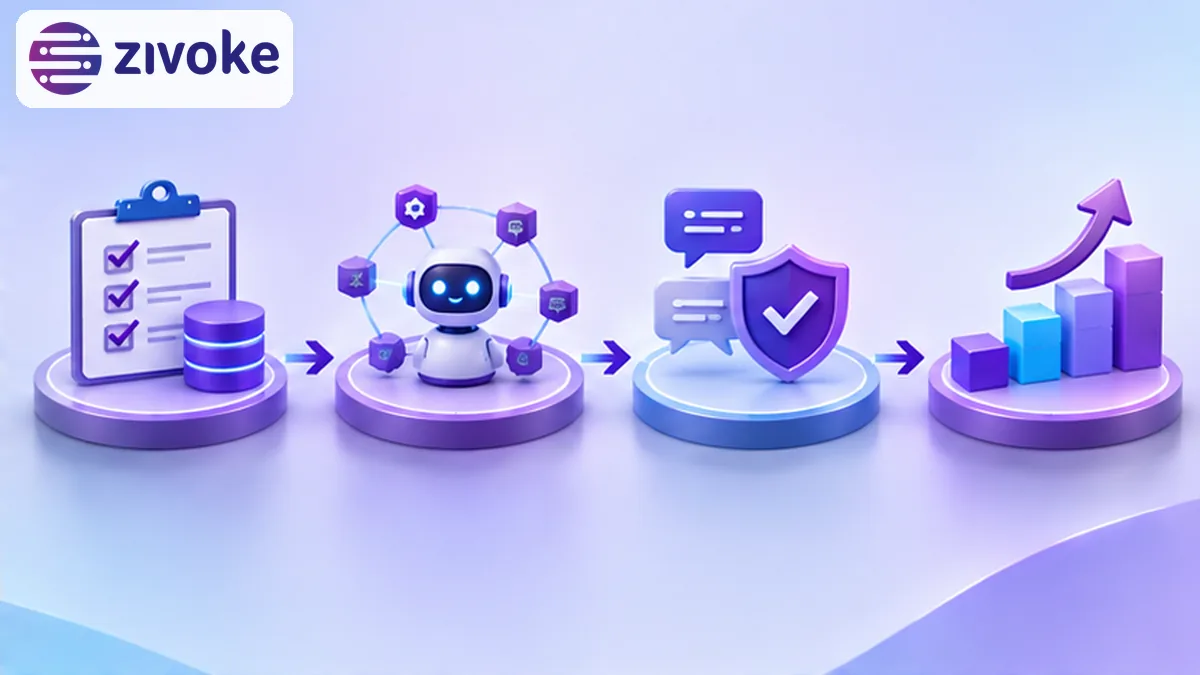
How to implement Agentforce in New York safely comes down to four stages, each with a clear gate.
assess data, permissions, knowledge, and actions, then fix what the first use case needs.
agree topics, instructions, actions, guardrails, and handoff rules with the people who do the work.
run real scenarios, edge cases, and adversarial prompts until accuracy and behavior meet agreed thresholds.
launch to a small group, measure, tune, then widen the audience and add use cases.
A first agent for one contained use case often takes a matter of weeks once the org is ready, though the timeline depends on how much readiness work is needed. We agree the plan after the readiness assessment. With access granted and scope agreed, work can start within three days.
These are the kinds of first agents that tend to suit New York organizations. They are typical patterns, not named client results.
An agent answers routine questions from clients of a wealth manager or bank: document requests, statement timing, contact details, and appointment booking. It verifies who it is talking to through your existing authentication, uses only that client's records, and hands off to a human for anything involving advice or money movement.
An agent helps brokers check policy status, find documents, and open service cases, using data from the policy system through existing integrations. Complex underwriting questions go straight to a person.
An agent answers questions about application status, deadlines, and required documents, especially during peak admissions weeks when staff are stretched. Anything involving decisions or financial aid is passed to a counselor.
An agent responds to inbound inquiries within minutes, asks qualifying questions, books meetings with the right rep, and logs everything in Salesforce.
An agent inside the console summarizes long case histories, suggests knowledge articles, and drafts replies for a human to review and send.
Each starts small, with clear limits, and can expand once it proves reliable.
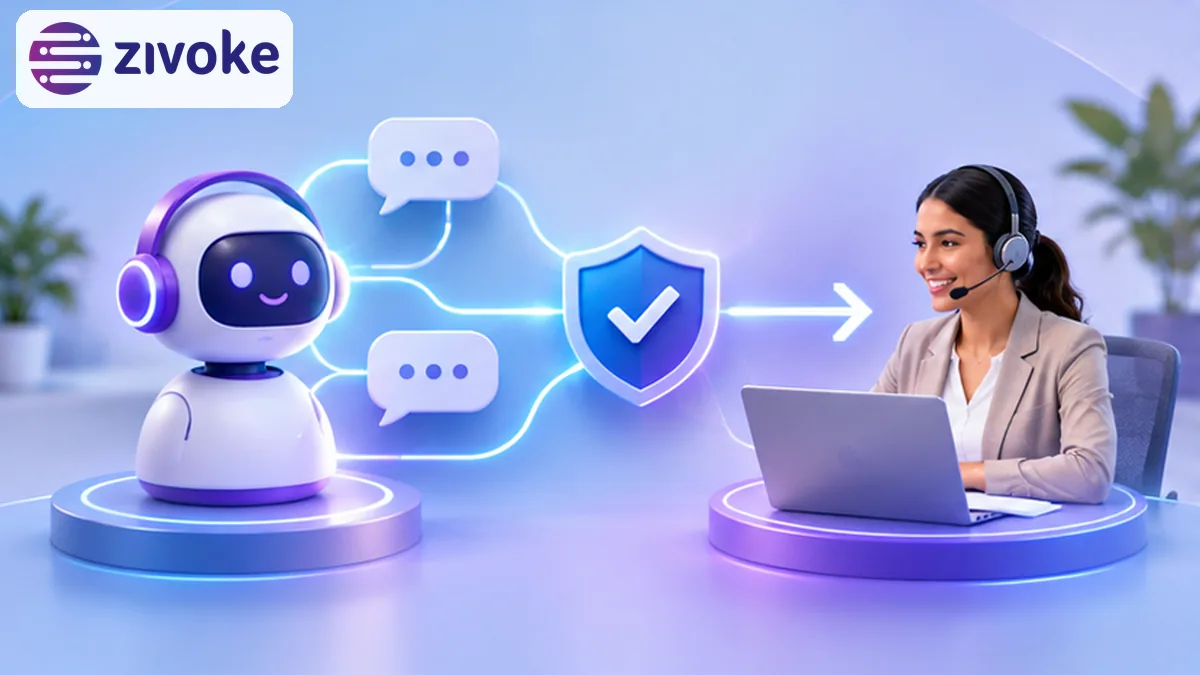
Trust is the deciding factor for AI in New York. Clients, regulators, and your own staff need confidence that an agent will not overstep.
We build guardrails at several levels:
We also test what happens when someone tries to push the agent outside its limits. An agent that holds its boundaries under pressure is one you can put in front of clients.
New York has moved early on AI rules, and regulated firms here face extra scrutiny. NYC Local Law 144 sets requirements for automated employment decision tools used in hiring and promotion. The New York State Department of Financial Services has issued guidance on managing AI-related cybersecurity risks for the firms it supervises, alongside its cybersecurity regulation, 23 NYCRR Part 500. Businesses holding private information about New York residents are also subject to the NY SHIELD Act.
We are Salesforce specialists, not lawyers, and we do not give legal advice. Your legal and compliance teams decide which rules apply and what they require. What we do is design agents that make those requirements easier to meet:
An agent should earn its place with numbers, not enthusiasm. We agree measures before launch and report on them afterwards.
We set a baseline before launch, using a few weeks of current data on volumes, handling times, and response times, so the comparison afterwards is fair. Results are reviewed with your service or sales leaders every two weeks during the first months, then monthly once the agent is stable.
If a measure falls short, we tune the agent or narrow its scope. If an agent is not delivering value, we will say so rather than push it to more users.
A good Agentforce launch is quiet. Routine requests get answered quickly, staff spend more time on complex work, and nobody gets an awkward phone call about something the agent said.
Agentforce is new, so we are careful about claims. What we can point to is our Salesforce delivery record. One example is the solution we built for AstroLabs, a Dubai-headquartered firm that helps companies establish themselves in Saudi Arabia. Zivoke built its EnterKSA tracking solution on Sales Cloud and Community Cloud, covering more than thirty company-formation steps, with a clear data model, automation, KPI reporting, and a client portal. It ran from October 2022 to May 2023; the AstroLabs case study has the details. That was not an Agentforce project, but it shows the foundation agents depend on: structured data, reliable automation, and a portal clients already use.
For New York clients, our Agentforce work is built to deliver agents that stay within their limits, answers grounded in your own data, and measurable time saved for your teams. Client reviews are on our Clutch profile.
Firms choose a Salesforce Agentforce partner in NYC that is cautious in the right places and practical everywhere else. Zivoke is a New York-based Salesforce partner, our team includes the Agentforce Specialist certification alongside administration, development, and cloud certifications, and our work is reviewed independently on Clutch.
Our certifications include:
What you get:
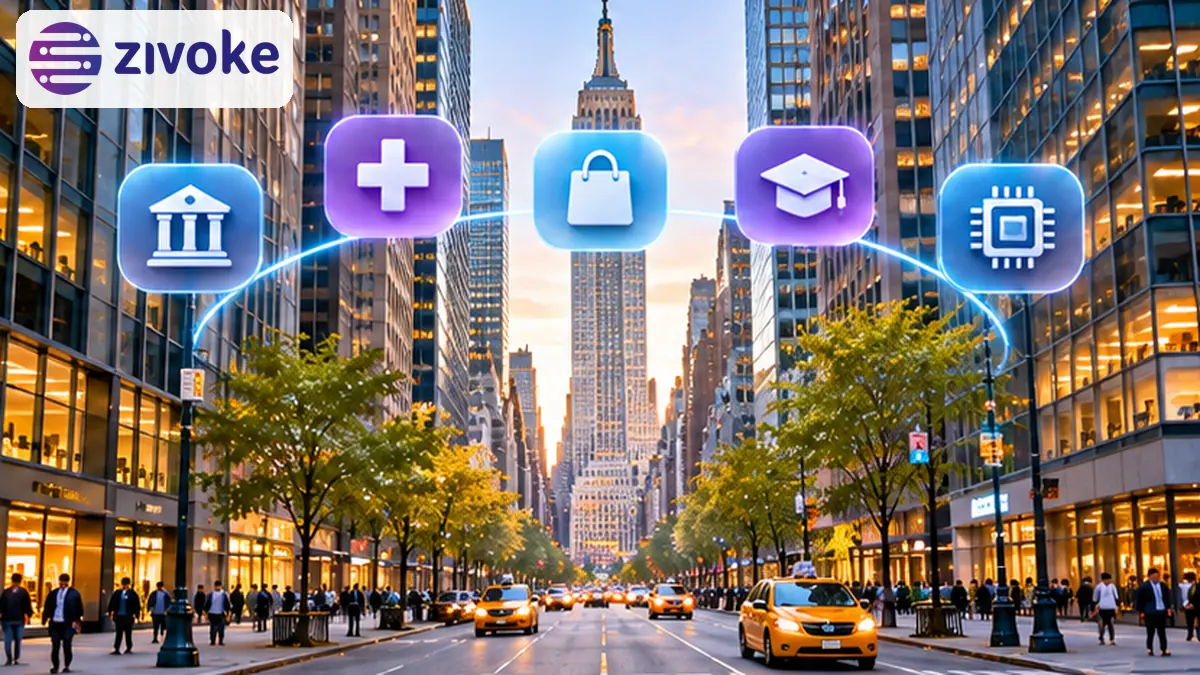
Each sector has its own risks and opportunities for AI agents.
| Industry | Typical first agent |
|---|---|
| Banking and wealth management | Client service for documents, statements, and appointments. See Salesforce for financial services. |
| Insurance | Broker and policyholder service for status and documents |
| Higher education | Applicant and student questions during peak periods. See Salesforce for higher education. |
| Media and advertising | Internal assistant for campaign status and account summaries |
| SaaS and technology | Lead qualification and first-line product support |
| Healthcare | Appointment and general inquiry handling, with HIPAA-aware limits on data |
We work with companies across Manhattan, Brooklyn, Queens, the Bronx, and Staten Island, and across Westchester, Long Island, the Hudson Valley, and Northern New Jersey. Design workshops work best in person, so we schedule on-site sessions with the teams whose work the agent will support. Build and testing are mostly remote. We work on Eastern Time, alongside your service, sales, IT, and compliance teams.
Need help with the data or integrations underneath? See our Salesforce integration services in New York City and Salesforce managed support services in New York City.
Tell us which routine work your teams would most like to hand off. We will check whether your org is ready, recommend a first use case, and show you what a safe, measured launch would look like.
Book a free scoping call