New York, NY · Enterprise Salesforce expertise+1 (347) 254 7642
Salesforce for healthcare in New York City serves one of the largest and most complex health systems in the world. The city has major academic medical centers, large hospital networks, community health centers in every borough, specialty practices, home care agencies, behavioral health providers, health plans, and life-sciences companies clustered in Manhattan and Long Island City. Patients move between all of them, often speaking different languages and juggling insurance, transport, and work. Zivoke helps New York healthcare organizations use Salesforce to make that journey easier for patients and less manual for staff.
We focus on the work that happens around clinical care: access and intake, referrals, scheduling support, care coordination, patient outreach, contact centers, and provider relationships. The electronic health record stays the clinical system of record. Salesforce gives care teams, coordinators, and service staff a connected view of each patient and the tools to follow through, under access rules your privacy and compliance teams approve.
Healthcare organizations use Salesforce for the relationship and coordination work that clinical systems are not built for. A complete design usually covers:
The goal is not to replace the EHR. It is to close the gaps between departments, locations, and organizations where patients most often get lost.
We set up Salesforce for New York healthcare organizations of many kinds.
Hospital systems and academic medical centers that want to reduce referral leakage, improve access, and coordinate care across many sites.
Community health centers and FQHCs serving diverse populations, where outreach, language, and social needs matter as much as clinical care.
Specialty and multi-site practices in Manhattan and the boroughs that need better intake, scheduling support, and patient communication.
Home care and behavioral health providers that coordinate visits, care plans, and family contacts.
Health plans and managed care organizations with member services, care management, and provider network teams.
Life-sciences and medtech companies running patient support programs, medical affairs, and field teams.
Signs your organization needs a better patient and provider CRM:
Our Salesforce CRM for healthcare in NYC work covers access, referrals, care, service, and providers, delivered in phases with privacy built in from the start.

Design and configuration of Health Cloud's patient-centered data model, care plans, and care teams, shaped around how your departments actually work.
Inquiry capture, intake forms, eligibility steps, and appointment request routing, with status visible to staff and patients.
Inbound and outbound referrals tracked through each step, with alerts when a referral stalls and reports on leakage.
Care plans, coordinator tasks, outreach campaigns, and transitions of care after discharge.
Service Cloud for patient calls, messages, and portal requests, with patient context and routing by language, location, or service line.
Experience Cloud portals for patients to complete forms and send requests, and for referring providers to submit and track referrals.
Connections to EHR, scheduling, and other systems using standards such as HL7 and FHIR. See our Salesforce integration services in New York City.
Salesforce Health Cloud NYC projects start with the data model. Health Cloud is Salesforce's industry product for healthcare and life sciences, and adds features standard Salesforce does not have.
| Feature | What it supports |
|---|---|
| Patient and member profiles | Demographics, care team, conditions summary, and engagement on one record |
| Care plans | Goals, problems, and tasks for patients managed across a team |
| Care team | The clinicians, coordinators, and family members involved in a patient's care |
| Referral management | Referral intake, tracking, and follow-up |
| Utilization and care management | Support for care management teams at health plans |
| Patient engagement | Outreach, assessments, and surveys |
| Provider relationship management | Referring physicians and network relationships |
We configure only what you will use. A specialty practice may need intake, referrals, and patient communication. A hospital system may need referrals, care coordination, and a large contact center. A health plan may focus on member services and care management.
Access is often where patients form their first impression, and where many are lost. In a city where patients can choose among many providers, a slow or confusing intake process costs volume.
A typical access design includes:
Scheduling itself usually stays in the EHR or scheduling system. Salesforce manages the request, the communication, and the follow-up around it.
Referral leakage, when a referred patient never reaches the intended provider, is a major issue for New York health systems with many competitors nearby. Salesforce can track every step.
referrals captured from fax, e-referral, portal, or phone into one queue.
clinical or administrative review, with missing information requested quickly.
the patient contacted to schedule, with attempts logged.
appointment confirmed, with the referring provider notified.
results or visit notes shared back where appropriate.
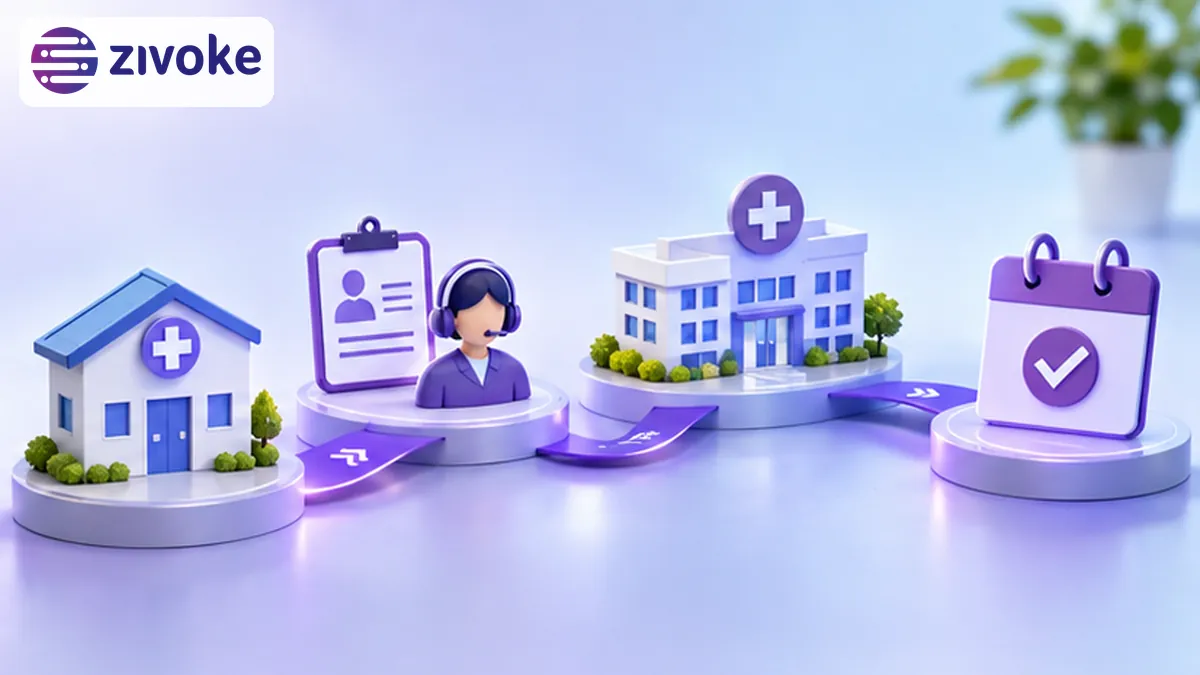
Dashboards show referrals by source, service line, and status, so access leaders can see where patients drop out and act on it.
Care coordination matters most for patients with complex needs: chronic conditions, recent discharges, behavioral health, or social barriers such as housing and transport.
Coordinators see their caseload, overdue tasks, and recent patient activity in one place, rather than across several systems and spreadsheets.
Salesforce for healthcare providers in New York City also covers relationships with other providers. Referring physicians are a major source of patients, and health systems compete for them.
Leadership sees which relationships are growing and which need attention.
The EHR remains the clinical system of record. Salesforce needs a reliable, limited view of the data that supports access, coordination, and service.
We integrate with common platforms such as Epic, Oracle Health, and athenahealth, using standards such as HL7 and FHIR and integration tools such as MuleSoft where they fit. Typical data flows:
Each integration has a written data contract naming the system of record for each field, the minimum data needed, how often data moves, and what happens on failure. We bring in only the data each use case needs.
Many organizations search for a Salesforce HIPAA compliant CRM in New York. The accurate answer is that HIPAA compliance depends on the whole arrangement, not only on the software. Salesforce offers a business associate agreement (BAA) covering specific services, and whether a given setup meets HIPAA depends on that agreement, how the org is configured, and your organization's policies and practices. Organizations holding private information about New York residents also fall under the NY SHIELD Act, and providers licensed in New York answer to state health regulators.
We are Salesforce specialists, not lawyers or compliance officers, and we do not give legal advice. Your privacy and compliance teams decide what is required. We build Salesforce to support their decisions:
AI can save healthcare staff time, but it must be used carefully. We help New York organizations start with low-risk, administrative uses.
AI features run within your access rules and the Einstein Trust Layer, and any use involving patient data should be reviewed by your privacy team first. See our Salesforce AI implementation partner in New York City.
These examples show the shape of common requests. They are composites, not named client results.
A health system with sites in Manhattan and Queens receives specialty referrals by fax, phone, and its EHR. Nobody can say how many referrals become appointments. A single referral queue in Salesforce, with outreach logging and stall alerts, shows leakage by service line, and access teams follow up on stalled referrals within a day.
A health center in the Bronx runs screening and chronic care outreach from spreadsheets in several languages. Salesforce manages outreach lists, preferred language, attempts, and results, and coordinators see their caseload in one place. Reports show which programs reach patients and which need a different approach.
A multi-site specialty practice loses new patients because intake calls go unanswered at busy times. Web and portal intake forms feed one queue, requests are routed by location and specialty, and patients get updates while they wait for scheduling.
A biotech company in Long Island City runs a support program that helps patients start and stay on therapy. Health Cloud tracks enrollment, benefits checks, nurse calls, and adherence outreach, with strict separation between program data and commercial teams.
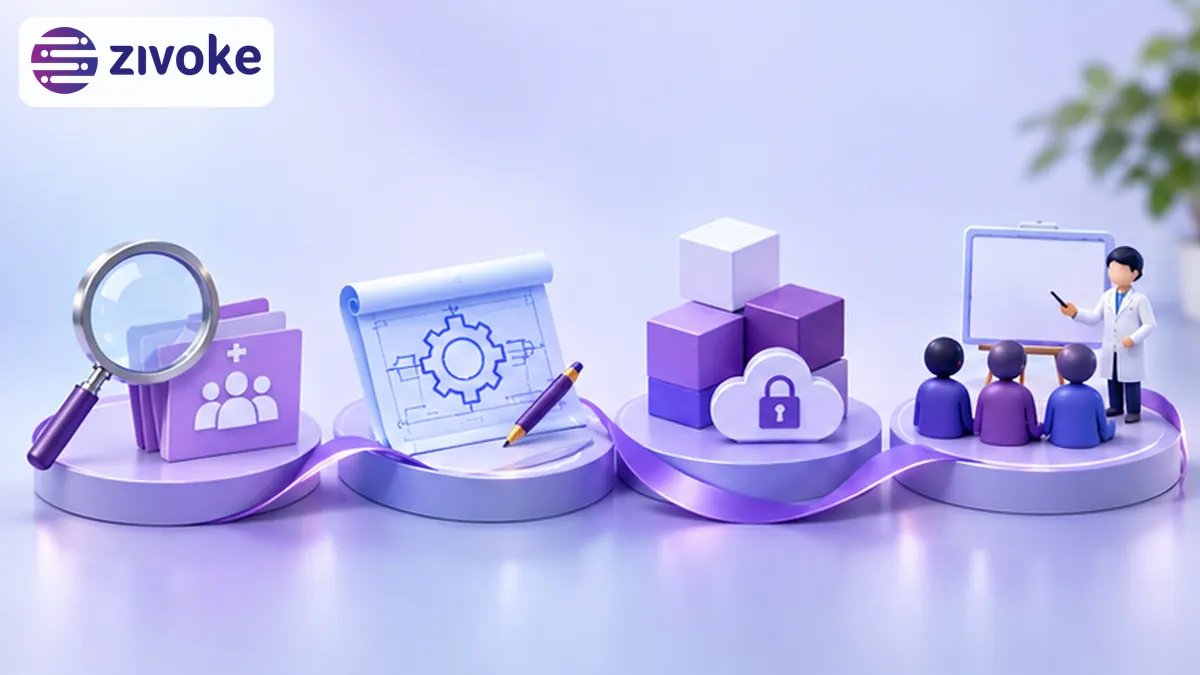
Every Health Cloud implementation in NYC we run follows four stages, with privacy involved from the first week.
interviews with access, coordination, service, liaison, IT, and privacy teams, plus a review of current systems and data.
data model, minimum data, processes, integrations, and access rules agreed with each team and approved by privacy.
configuration, integrations, and testing in a sandbox using test data, not live patient data.
role-based training, a phased go-live by department or site, and support afterwards.
Most organizations start with one area, such as referrals or the contact center, and expand once it is working. With access granted and scope agreed, work can start within three days.
A good healthcare org shows up in patient experience and staff time. Fewer referrals are lost. Patients get faster answers. Coordinators spend less time searching and more time reaching patients. We agree measures at the start, such as referral conversion, time to schedule, outreach reach, and service levels, and report against them.
An example of our process-focused Salesforce work is the solution we built for AstroLabs, a Dubai-headquartered firm that helps companies establish themselves in Saudi Arabia. Its EnterKSA service tracks clients through more than thirty steps across several government bodies. Zivoke built it on Sales Cloud and Community Cloud, with a phase-by-phase data model, automation for dates and reminders, KPI reporting, and a portal where clients follow their progress. It ran from October 2022 to May 2023; the AstroLabs case study has the details.
That was not a healthcare project, but the pattern is close to referral and care-coordination work: many steps, several teams involved, deadlines to track, and an outside party who wants to know where things stand. Client reviews are on our Clutch profile.
Healthcare organizations choose a Salesforce partner that treats privacy as a design requirement, not an afterthought. Zivoke is a New York-based Salesforce partner, our team holds certifications across administration, Service Cloud, Experience Cloud, development, and Agentforce, and our work is reviewed independently on Clutch.
Our certifications include:
What you get:
Different healthcare organizations use Salesforce in different ways.

| Organization type | Typical Salesforce focus |
|---|---|
| Hospital systems and academic medical centers | Referrals, access, contact center, physician relations |
| Community health centers and FQHCs | Outreach, language preferences, care coordination |
| Specialty and multi-site practices | Intake, patient communication, referral intake |
| Home care and behavioral health | Visit coordination, care plans, family contacts |
| Health plans | Member services, care management, provider networks |
| Life sciences and medtech | Patient support programs, medical affairs, field teams |
We work with healthcare organizations across Manhattan, Brooklyn, Queens, the Bronx, and Staten Island, and across Westchester, Long Island, the Hudson Valley, and Northern New Jersey. Discovery works best on site, so we visit access centers, coordination teams, and clinics to see how work actually happens. Build and testing are mostly remote, using test data. We work on Eastern Time.
Tell us where patients most often get lost in your organization today. We will show you how Salesforce and Health Cloud could close those gaps, with privacy and access rules your compliance team can approve.
Book a free scoping call