New York, NY · Enterprise Salesforce expertise+1 (347) 254 7642
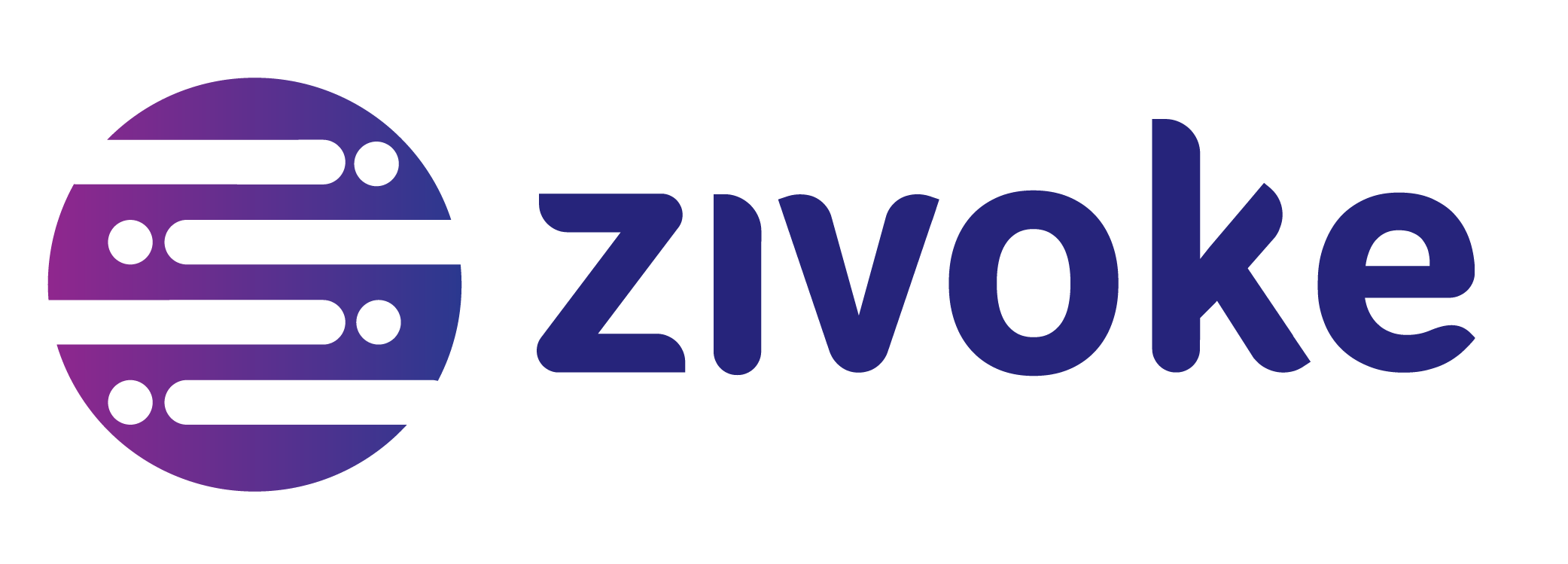
A Salesforce AI implementation partner in New York City helps you turn the AI features already sitting in your Salesforce licenses into results you can measure. Salesforce now offers predictive scoring, generative drafting, conversation insights, a unified customer data layer, and AI agents. Most New York firms have access to some of these and use very few. The reasons are usually the same: data that is not ready, unclear ownership, worries about privacy and regulators, and no agreed way to judge whether AI is working. Zivoke helps companies in Midtown, the Financial District, Hudson Yards, Brooklyn, and across the metro get past those obstacles one use case at a time.
We start with the data and the business problem, not the feature list. Then we choose the right Salesforce AI tool for the job, set it up with governance your compliance team can review, and measure what it changes.
Salesforce AI is not one product. It is a set of capabilities that build on each other, and the order you adopt them in matters.
A Salesforce AI partner helps you decide which of these to use first, prepares the data and permissions they depend on, configures them, and measures their effect. For agent-specific projects, see our Agentforce implementation partner in New York City.
Firms that bring in a Salesforce AI consultant in New York City usually fall into one of these groups.
Leaders asked for an AI plan. The board or the CEO wants to know how the firm will use AI, and the Salesforce team needs a realistic roadmap rather than a list of features.
Teams with licenses they do not use. The org includes Einstein or Data Cloud capabilities, but nobody has had time to switch them on properly.
Firms with scattered customer data. Client information lives in Salesforce, a data warehouse, billing, support, and marketing tools, and no one sees the full picture.
Regulated firms that want to move carefully. Banks, insurers, and healthcare organizations that want AI benefits without creating new compliance or privacy risks.
Sales and service teams looking for an edge. Managers who want better prioritization, faster responses, and less time spent on admin work.
Signs a Salesforce AI program would help now:
Our Salesforce AI work covers the full stack, from data to agents, and each piece can be delivered on its own.

A short assessment of your data quality, permissions, integrations, and business priorities. You get a ranked list of AI use cases, the prerequisites for each, and a realistic order to tackle them in.
Connecting data sources, mapping them to a common model, resolving identities, and building calculated insights and segments that sales, service, marketing, and AI features can all use.
Salesforce Einstein implementation in NYC covers predictive scoring for leads and opportunities, forecasting support, and conversation insights for sales calls, configured on your data and reviewed for accuracy before teams rely on it.
Prompt templates grounded in your Salesforce records for drafting emails, summarizing accounts and cases, preparing meeting briefs, and creating standard documents, with human review built in.
Salesforce Data Cloud and Agentforce in NYC work best together. Data Cloud gives agents a complete, trusted view of each customer, and agents act on it within defined limits. We plan both as one program when the use case needs it.
Policies, permission sets, Trust Layer configuration, review processes, and documentation so your compliance and security teams can approve AI use with confidence.
Baselines before launch, agreed measures after, and regular reviews to improve accuracy and adoption.
Every Salesforce AI feature is only as good as the data behind it. As a Salesforce Data Cloud partner in NYC, we treat the data layer as the first project, not an afterthought.
Data Cloud, which Salesforce has also introduced under the name Salesforce Data 360 in New York and other markets, does four things that matter for AI:
| Step | What we do | Result |
|---|---|---|
| Source inventory | List systems, owners, and data quality | A clear picture of what exists |
| Data model mapping | Map sources to a common model | Consistent fields across systems |
| Identity resolution | Agree matching rules with data owners | One profile per client |
| Insights and segments | Build the metrics and groups use cases need | Data ready for AI and teams |
| Governance | Set access, consent, and retention rules | Data use your compliance team approves |
We start with the sources a first use case needs, rather than trying to connect everything at once.
Predictive AI helps people prioritize. A Salesforce Einstein consultant in NYC makes sure the predictions are accurate, explained, and actually used.
Common predictive use cases include:
Predictions need enough clean history to be reliable. Before switching them on, we check data volume and quality, run the models, compare predictions against real outcomes, and explain the results to the managers whose teams will use them. If the data cannot support a reliable model yet, we say so and fix the data first.
Generative AI saves time on writing and reading. In Salesforce, it is most useful when grounded in your own records, so the output reflects real client details rather than generic text.
Typical generative use cases:
We build prompt templates with Prompt Builder, test them on real records, and keep a human in the loop for anything sent to clients. For regulated communications, such as those reviewed by compliance in financial services, drafts go through the same approval process as any other message.
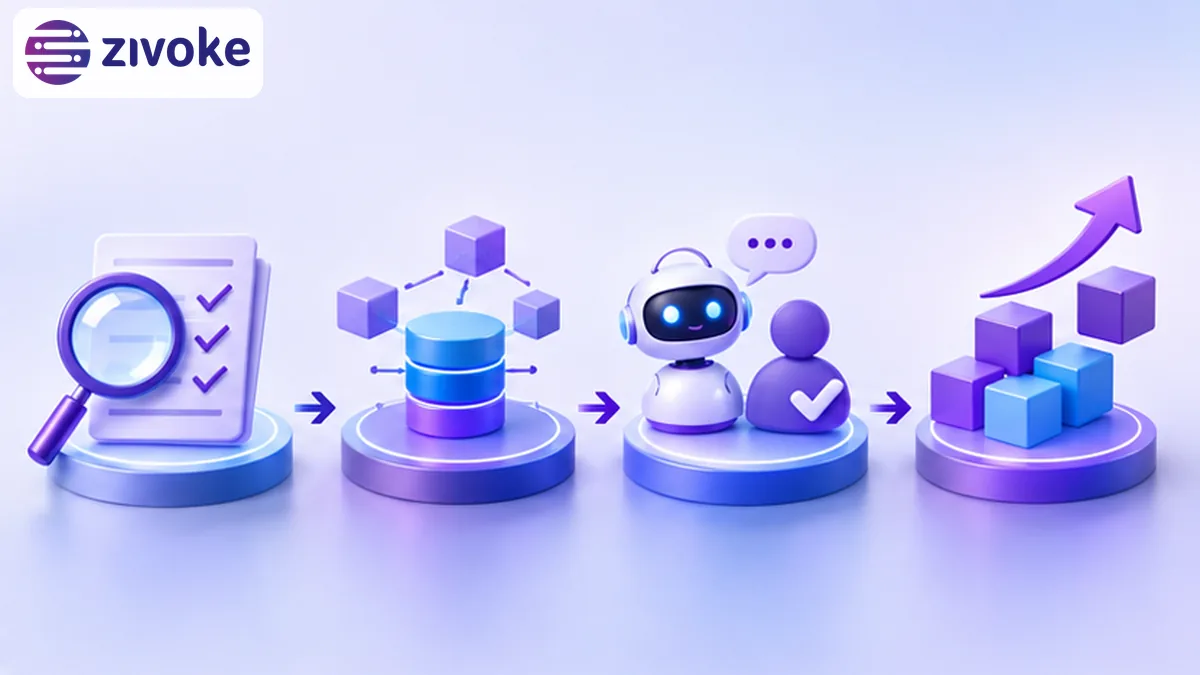
Every Salesforce AI program we run follows four stages.
business priorities, data readiness, permissions, and governance needs.
fix the data, permissions, and integrations the first use case depends on.
configure one use case, test it, launch to a small group, and measure against a baseline.
extend to more users and add the next use case on the roadmap.
A first pilot can often launch within weeks once the data is in shape. The preparation work varies widely, from a few weeks of clean-up to a larger Data Cloud project. We agree the plan after the assessment. With access granted and scope agreed, work can start within three days.
A common mistake is reaching for the newest feature when a simpler one would do. We match each business problem to the tool that fits.
| Business problem | Usually the right tool |
|---|---|
| Which leads or deals should we focus on? | Einstein predictive scoring |
| Reps spend too long writing routine emails | Prompt Builder email templates |
| Agents need context before replying | Generative record and case summaries |
| Client data is spread across systems | Data Cloud |
| Customers need answers outside business hours | Agentforce service agent |
| A routine task needs doing end to end | Agentforce agent with defined actions |
| A rule-based process needs automating | Flow, not AI |
That last row matters. Some problems are better solved with plain automation, which is cheaper, more predictable, and easier to audit. We will tell you when AI is not the answer.
AI governance does not have to be heavy, but it does have to be clear. We set up a practical framework that your compliance, security, and business teams can all work with.
This framework also gives you a clear answer when a client, auditor, or regulator asks how your firm uses AI.
A practical point: governance works best when it is fast. A use case that waits three months for approval loses its sponsor. We aim for a short, written review that compliance can complete in days, with the detailed controls captured in configuration rather than in long policy documents. That keeps teams moving while keeping risk visible.
New York has been active on AI rules, and regulated firms here face extra scrutiny. NYC Local Law 144 sets requirements for automated employment decision tools used in hiring and promotion. The New York State Department of Financial Services has issued guidance on AI-related cybersecurity risks for the firms it supervises, alongside 23 NYCRR Part 500. Businesses holding private information about New York residents also fall under the NY SHIELD Act.
We are Salesforce specialists, not lawyers, and we do not give legal advice. Your legal and compliance teams decide which rules apply. We design Salesforce AI to support their review:
Salesforce AI is moving quickly, so we are careful about claims. What we can show is how we build the foundations AI depends on.
One example is the solution we built for AstroLabs, a Dubai-headquartered firm that helps companies establish themselves in Saudi Arabia. Zivoke built its EnterKSA tracking solution on Sales Cloud and Community Cloud, covering more than thirty company-formation steps, with a structured data model, automation, KPI reporting, and a client portal. It ran from October 2022 to May 2023; the AstroLabs case study has the details. That was not an AI project, but it reflects the groundwork AI needs: clean, structured data, reliable processes, and reporting the business trusts.
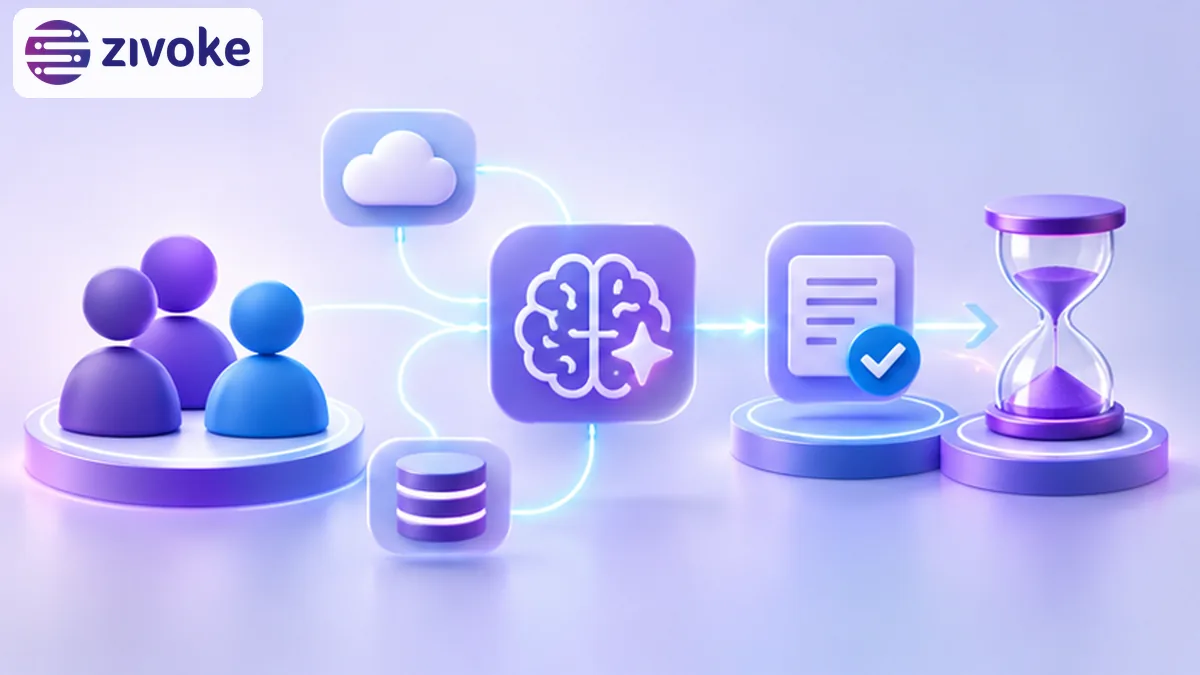
For New York clients, our Salesforce AI work is built to deliver AI features grounded in trusted data, governance your compliance team can sign off, and measurable improvements in how sales and service teams work. Client reviews are on our Clutch profile.
New York firms choose a Salesforce AI partner that is practical about results and serious about risk. Zivoke is a New York-based Salesforce partner, our team includes the Agentforce Specialist certification alongside administration, development, and cloud certifications, and our work is reviewed independently on Clutch.
Our certifications include:
What you get:
Each sector has its own data, risks, and opportunities for AI.
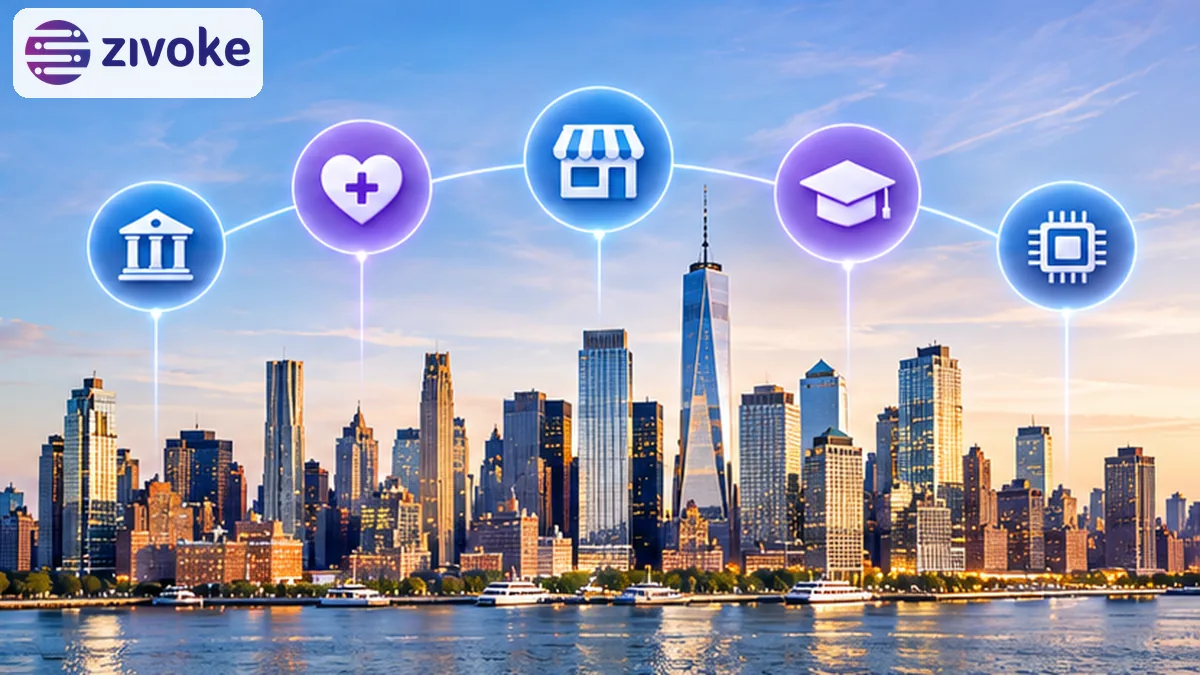
| Industry | Typical first AI use case |
|---|---|
| Banking and wealth management | Client briefs before advisor meetings, next-best-action prompts. See Salesforce for financial services. |
| Insurance | Case summaries for service teams, claims triage support |
| Media and advertising | Opportunity scoring, proposal and follow-up drafts |
| Higher education | Applicant scoring support, counselor briefs. See Salesforce for higher education. |
| SaaS and technology | Churn signals from Data Cloud, renewal prioritization |
| Healthcare | Case summaries and routing, with HIPAA-aware limits on data |
We work with companies across Manhattan, Brooklyn, Queens, the Bronx, and Staten Island, and across Westchester, Long Island, the Hudson Valley, and Northern New Jersey. Roadmap and governance workshops work best in person, so we schedule on-site sessions with leadership, compliance, and the teams that will use AI. Build and testing are mostly remote. We work on Eastern Time.
Need the data or integration work underneath? See our Salesforce integration services in New York City.
Tell us where your teams lose the most time, or where better predictions would change decisions. We will check your data, recommend a first use case, and show you what a governed, measurable launch would look like.
Book a free scoping call