New York, NY · Enterprise Salesforce expertise+1 (347) 254 7642
Salesforce CRM consulting in New York City starts with a simple question: does your CRM match how your people actually sell and serve? In most orgs we review, it does not. The opportunity stages were set up years ago by someone who has left. Reps track the real pipeline in a spreadsheet. Service cases bounce between queues because nobody owns the handoff. Leadership asks for a forecast and gets three different numbers. Zivoke fixes those problems for companies in Midtown, the Financial District, Hudson Yards, Brooklyn, and across the metro.
Our work focuses on the processes inside the CRM: how leads become clients, how deals move, how cases get resolved, and how managers see what is happening. We redesign those processes with the people who run them, rebuild Salesforce to fit, and measure adoption until the new way of working sticks.
CRM consulting sits between strategy and configuration. Strategy decides what Salesforce should do for the business. Configuration builds it. CRM consulting makes sure the day-to-day processes in between are clear, simple, and reflected accurately in the system.
The work usually covers five processes:
New York businesses often run these processes across several teams, offices, and legal entities, with very different habits in each. A relationship manager at a wealth firm, an account director at an agency, and an admissions counselor at a university all use a CRM, but the processes behind their screens look nothing alike. Good CRM consulting respects those differences while keeping the data consistent enough to report on.
Most teams that bring in a Salesforce CRM consultant in NYC are not short of features. They are short of a process that everyone follows. These are the situations we see most often.
The spreadsheet shadow. Salesforce is the official system, but the real pipeline lives in a spreadsheet the sales director updates every Monday.
The forecast argument. Sales, finance, and leadership each have a different number, and the weekly meeting is spent debating which one is right.
The stalled rollout. Salesforce went live, but adoption is low. Reps log in only when reminded, and managers have given up on the dashboards.
The growing team. A firm doubled in size, added a new office or business line, and the CRM processes that worked for twenty people no longer work for a hundred.
The merger. Two companies with different sales processes now share one org, and nobody has agreed whose way wins.
Signs you need CRM consulting rather than more features:
If the issue is wider than CRM processes, such as platform choice or a multi-year roadmap, see our Salesforce consulting services in New York City.
Our CRM consulting services in New York City combine process design with hands-on Salesforce work, so recommendations do not end up in a slide deck that nobody acts on.

We sit with the people who use the CRM every day: reps, managers, service agents, and operations staff. We watch how they work, look at the data, and compare what the process is supposed to be with what actually happens. You get a short, plain report: what works, what does not, and the five or six changes that would make the biggest difference.
CRM process optimization in NYC means simplifying before automating. We remove steps that add no value, agree clear definitions for every stage and status, and decide which fields are truly required. Then we design automation for the steps that remain, such as lead routing, task creation, approvals, and alerts.
We rebuild opportunity stages, page layouts, lead assignment, and required fields around the redesigned process. Changes are made in a sandbox, tested with real users, and released in phases so teams are not hit with everything at once.
For service teams, we design case types, routing rules, queues, escalation paths, and service-level tracking. We also connect service back to sales, so account managers see open issues before they call a client.
We build reports and dashboards for each level of the business: a rep's daily priorities, a manager's pipeline review, and leadership's forecast and trends. Each dashboard answers a specific question, and we retire the ones nobody uses.
We set adoption targets, train people by role, coach managers on running meetings from Salesforce, and track usage weekly until the new habits hold.
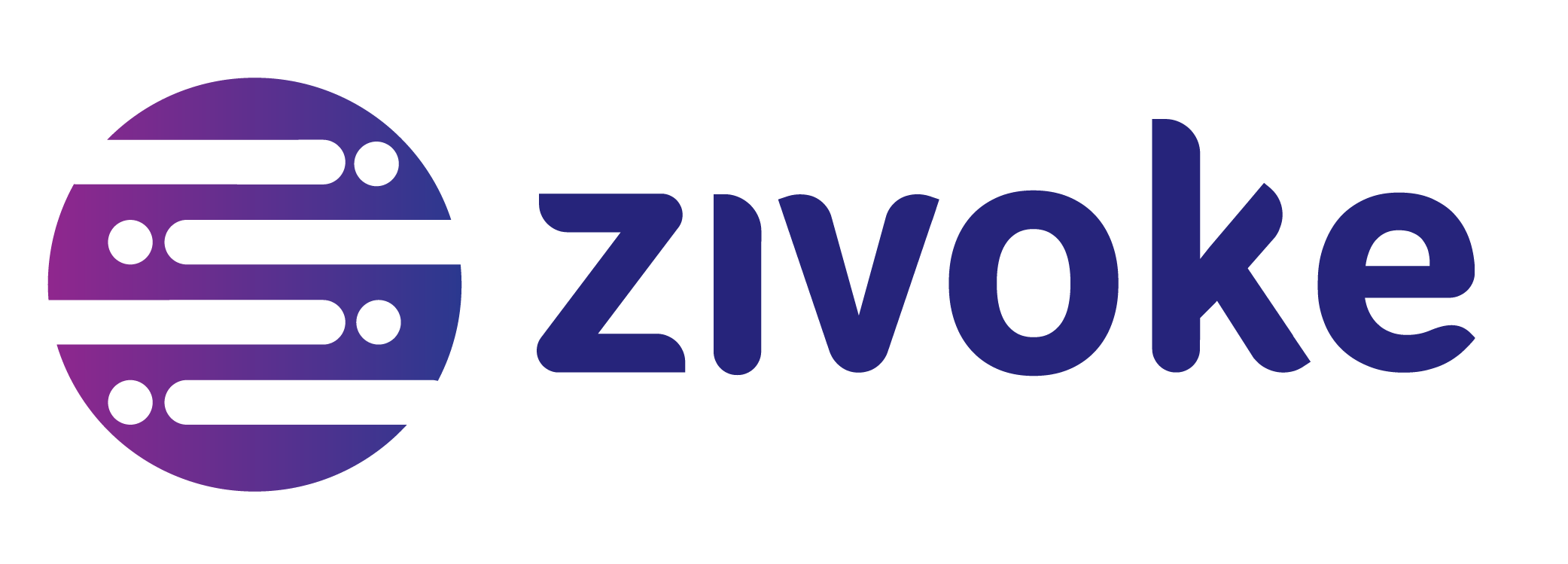
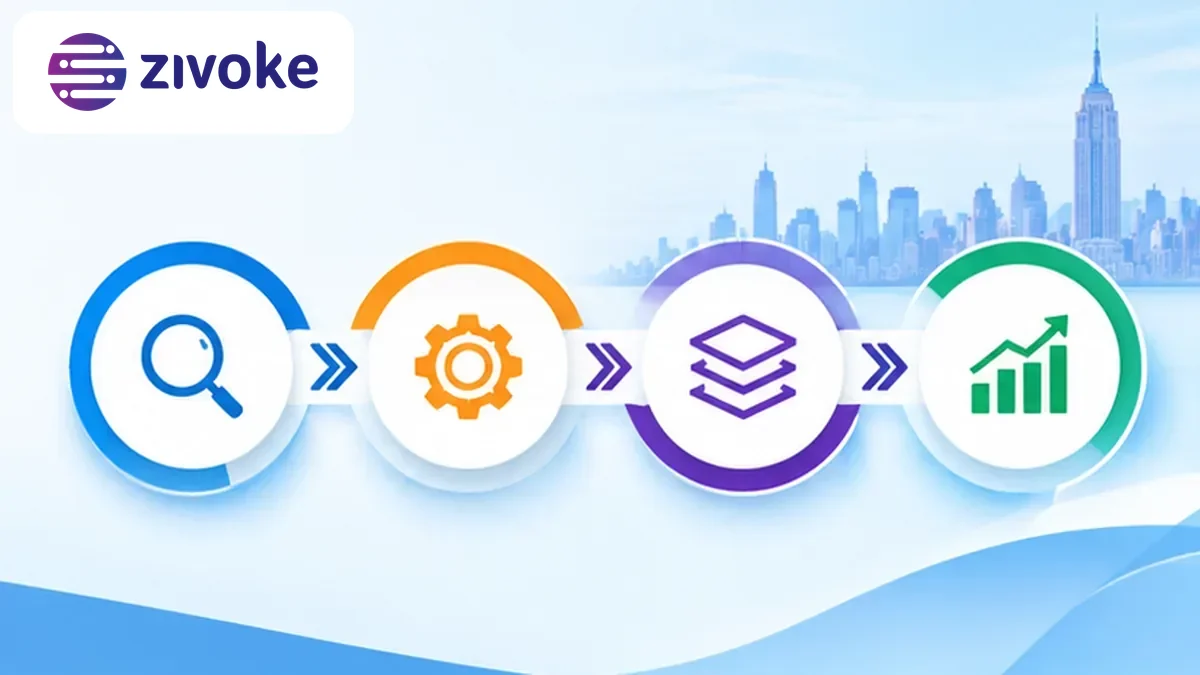
Our Salesforce CRM consulting services in NYC follow four stages. Each one ends with something your team can see and approve.
interviews, ride-alongs with reps and agents, and a review of the current data and reports.
agree the new process, stage definitions, required fields, and success measures with the people who own them.
configure Salesforce to match, test with real users, and release in phases.
train, coach managers, track adoption, and adjust until the process sticks.
A focused engagement for one sales or service team often runs eight to twelve weeks from first interview to measured adoption. Larger programs across several teams or business lines run in waves, one team at a time, so each wave learns from the last. With access granted and scope agreed, work can start within three days.
The sales process is where most CRM problems start. If stages are vague, every downstream report is vague too. We design sales processes around a few principles.
Stages reflect the buyer, not the seller. Each stage marks something the client has done, such as agreed to a discovery meeting, confirmed budget, or received a proposal. That makes stages verifiable instead of a matter of opinion.
Every stage has exit criteria. A deal moves forward only when specific conditions are met. Salesforce can enforce the critical ones with validation rules or guided paths.
Fewer required fields, chosen carefully. Each required field must be used in a report or a decision. If nobody uses it, it goes.
Lead routing that is fast and fair. Inbound leads are assigned in minutes, using clear rules based on territory, segment, or product, with a fallback when the owner is out.
Activities logged with minimal effort. Email and calendar integration capture meetings and messages automatically, so reps spend less time typing and more time selling.
| Stage example | Exit criteria |
|---|---|
| Qualified | Need, decision maker, and timeline confirmed |
| Discovery | Discovery meeting held and notes recorded |
| Solution | Proposed approach reviewed with the client |
| Proposal | Written proposal sent with pricing |
| Negotiation | Commercial terms under active discussion |
| Closed | Signed agreement or a recorded loss reason |
Your stages will differ, especially in sectors like wealth management, media sales, or higher education admissions. The point is that every stage means the same thing to everyone who uses it.
A forecast is only as good as the process behind it. In New York, where boards and investors expect precise numbers, an unreliable forecast is a serious problem.
We fix forecasting in three steps. First, we clean up stages and probabilities so the pipeline reflects reality. Second, we set up Salesforce forecasting with clear categories, such as pipeline, best case, and commit, and agree who can adjust what. Third, we build a weekly rhythm: reps update before a set time, managers review and adjust, and leadership sees one number with the history of how it changed.
Within a few cycles, the forecast meeting changes. Instead of arguing about whose number is right, managers discuss which deals need help. Finance and sales work from the same figure. That is the most visible sign that Salesforce CRM consulting has worked.
Service teams in New York handle demanding clients, from high-net-worth investors to corporate buyers and students on tight deadlines. A clear service process keeps response times predictable and stops cases from getting lost.
We design service processes around:
Service metrics such as first response time, resolution time, and reopened cases appear on a dashboard that managers review weekly.
A redesigned process only matters if people use it. Salesforce CRM adoption consulting in NYC is the part of our work that turns a new process into a habit.
We track six adoption measures from launch:
We review these with managers weekly for the first months, coach where usage lags, and adjust the process where it is clearly not working. The most effective adoption tactic is simple: managers run every pipeline and service meeting from Salesforce dashboards. When the meeting depends on the data, the data gets updated.
NYC teams stop using a CRM when they stop trusting its data. Duplicates, stale contacts, and missing fields send reps back to their spreadsheets.
As part of CRM consulting, we clean and protect your data:
A small data-quality dashboard keeps these measures visible after we leave, so standards do not quietly slip.
The same problems appear in New York org after org. Knowing them helps you spot them in your own.
Too many stages. Some orgs have ten or twelve opportunity stages, several of which nobody uses. Reps skip them, and reports become meaningless. Five to seven well-defined stages are usually enough.
Probability set by stage alone. A default percentage per stage ignores deal size, client history, and timing. We pair stage with forecast category and manager judgment, so the forecast reflects real risk.
One process for every team. A firm with both enterprise and mid-market sales, or new business and renewals, often forces them into one path. Separate record types and stage sets, sharing the same core data, let each team work its own way while leadership still sees one pipeline.
Required fields nobody reads. Every field added "just in case" slows reps down and lowers data quality, because people fill it with anything to save the record. We audit field usage and remove what no report or decision depends on.
No owner for the handoff. Leads pass from marketing to sales, deals pass from sales to onboarding, and cases pass between service tiers. When nobody owns the handoff, records stall. Clear ownership rules and alerts close the gap.
Dashboards built for the builder. Dashboards packed with charts that the person who built them understood, and nobody else does. We build each dashboard around one meeting and the decisions made in it.
Fixing these rarely needs new licenses or a rebuild. It needs clear decisions, made with the people who do the work, and a disciplined clean-up of the org.
Good CRM consulting shows up in behavior. The side spreadsheets disappear. Forecast meetings get shorter. Managers can see at a glance which deals and cases need attention. We agree measurable targets at the start, such as adoption, pipeline hygiene, forecast accuracy, and case resolution time, and report against them.
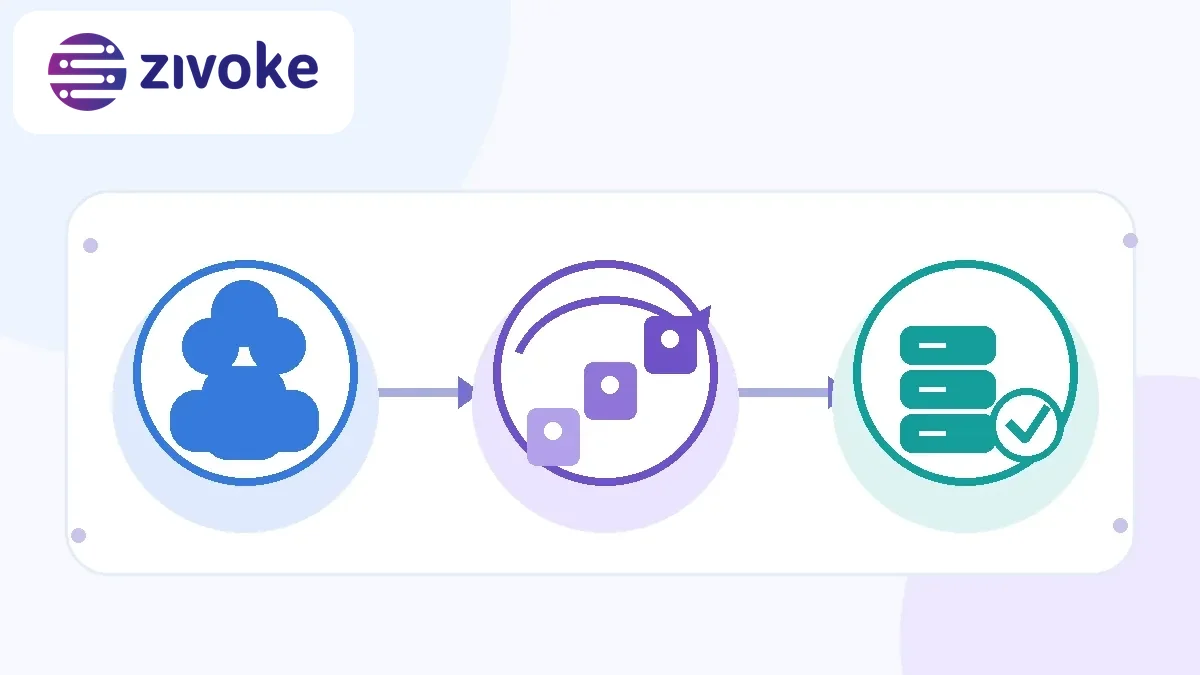
An example of our process-first approach is the solution we built for AstroLabs, a Dubai-headquartered firm that helps companies establish themselves in Saudi Arabia. Its EnterKSA service tracks clients through more than thirty company-formation steps across several government bodies. Zivoke modeled that process in Sales Cloud and Community Cloud, with a Project object for every phase and sub-stage, automation for dates and reminders, KPI reporting for management, and a client portal for progress and certificates. It ran from October 2022 to May 2023; the AstroLabs case study has the details.
That project was not in New York, but it shows the core of our CRM work: start from the real process, define each stage clearly, automate the chasing, and give managers reporting they rely on. For New York clients, our Salesforce CRM consulting is built to deliver processes your teams follow, a forecast leadership trusts, and data clean enough to act on. Client reviews are on our Clutch profile.
New York companies choose a Salesforce CRM consultant in NYC who understands both selling and Salesforce. Zivoke is a New York-based Salesforce partner, our team holds certifications across administration and the main clouds, and our work is reviewed independently on Clutch.
Our certifications include:
What you get from our CRM consulting:
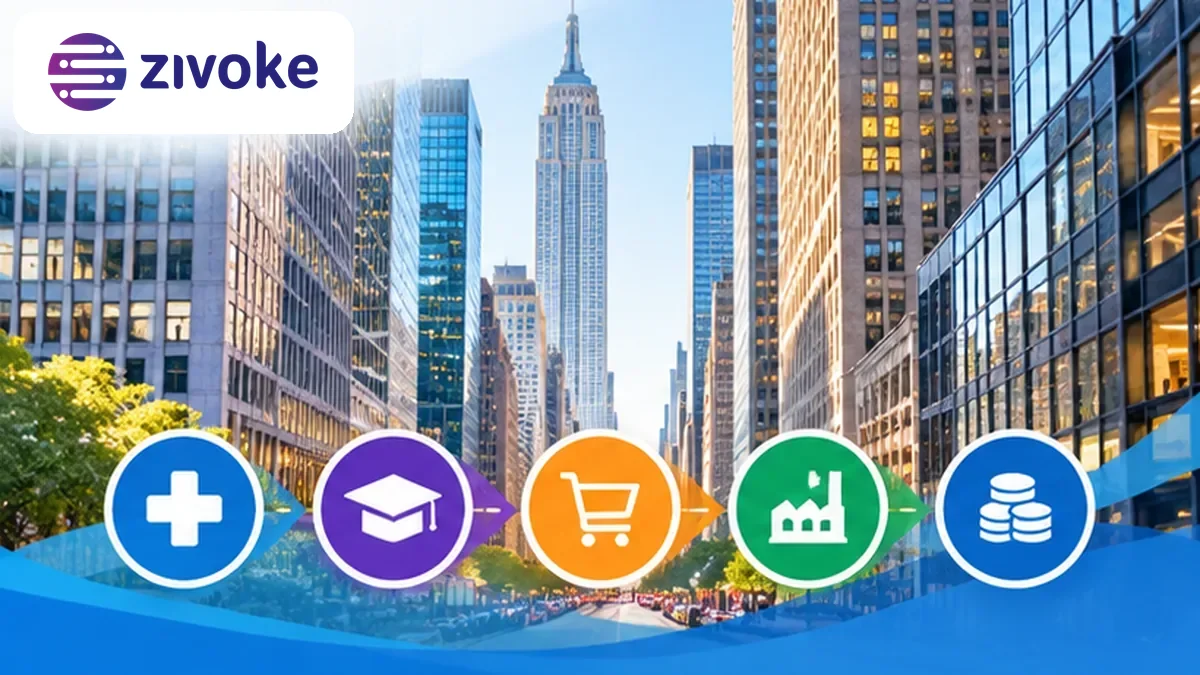
Salesforce CRM consulting for New York businesses has to reflect how each sector sells and serves.
| Industry | Typical CRM process focus |
|---|---|
| Banking and wealth management | Household views, referral tracking, advisor pipelines, client reviews. See Salesforce for financial services. |
| Insurance | Broker relationships, quote-to-bind pipeline, service cases |
| Media and advertising | Upfront and scatter pipelines, renewals, campaign follow-up |
| Professional services | Referral sources, matter or engagement pipelines, cross-selling |
| Higher education | Prospect-to-applicant funnel, counselor workloads, student services. See Salesforce for higher education. |
| SaaS and technology | Lead-to-opportunity conversion, renewals, customer success handoff |
We work with companies across Manhattan, Brooklyn, Queens, the Bronx, and Staten Island, and across Westchester, Long Island, the Hudson Valley, and Northern New Jersey. CRM consulting benefits from time in the room, so we schedule on-site workshops and ride-alongs during the Observe and Redesign stages, then deliver most build work remotely. We work on Eastern Time, alongside your sales and service leaders.
Need the new process built from scratch? See our Salesforce implementation partner in New York City. Want ongoing help after the redesign? See our Salesforce managed support services in New York City.
Tell us where your CRM falls short today. We will review how your teams sell and serve, show you the few changes that matter most, and help you make them stick.
Book a free scoping call